If you’ve ever stared at a mirror and thought about those little lines around your eyes, or that extra layer of skin under your jaw that seems to pop up no matter how many times you work out, or even dealt with a small, benign growth on your skin that the doctor said would be too invasive to cut out? Yeah, I’ve been there too. That’s actually why I ended up working with HIFU—funny, right? I didn’t set out to be a HIFU supplier. A few years back, my mom had a tiny lipoma on her upper arm that her dermatologist said would require a surgical excision, and she hated the thought of scars. She asked around, and someone mentioned HIFU, and that’s when I started digging in, because I’d never heard of it. HIFU

Turns out, HIFU isn’t some new trend. It’s been around for decades, used for all sorts of things from treating prostate cancer to non-surgical facial tightening. But for a lot of people, it’s still that vague buzzword tossed around in spa ads, like it’s just another fancy facial. Let’s break this down simple—no stuffy medical jargon, I promise.
First, what does HIFU even stand for? High-Intensity Focused Ultrasound. That’s it. The “focused” part is the secret sauce here. Ultrasound is the same tech they use to look at a baby in a womb, or to clean your jewelry—low-intensity, safe, bounces off tissue to give you a picture. HIFU cranks that intensity way up, but only in a tiny, specific spot. Think of it like a magnifying glass holding a flame over a leaf: the rest of the leaf stays cool and unharmed, but the spot under the magnifier burns. That’s exactly how HIFU works.
Here’s the breakdown step by step, for anyone who’s ever wondered:
- When a provider does a HIFU treatment, they first map the target area. Like, if someone wants jawline tightening, they’re not just blasting the whole face—they’re looking at the layer of tissue just under the skin, where the collagen is that keeps skin taut.
- They apply a special gel (or sometimes a water-based solution) to the area, so the ultrasound waves can pass through the skin easily—no friction, no weird reflections.
- The handpiece (that’s the device the provider holds) sends those high-intensity ultrasound waves straight to that specific deep tissue layer. Each little pulse hits a tiny spot, heating it up to around 60-70 degrees Celsius. That’s hot enough to create a controlled “thermal lesion” in the tissue—like a tiny, invisible scar.
- Here’s the part everyone cares about: the body’s natural response. When that tissue gets damaged just right, the immune system kicks in, sends collagen to repair the spot, and new, tighter, firmer tissue grows in its place over the next 2-6 months. No cutting, no anesthesia usually, just a little warm feeling during the treatment.
Wait, let’s clear up a common myth: HIFU doesn’t burn or damage the top layer of your skin at all. That’s the whole point of focusing the waves. The top skin is cool, the fat layer above the target is cool, only the exact spot we want to treat gets heated. Some people get a tiny redness right after, like a mild sunburn, but that fades in a few hours. No downtime, basically. That’s why it’s so popular for people who don’t want to take a week off work for recovery.
Now, let’s talk about what HIFU is actually used for, because it’s not just facials (though that’s a big part of it for a lot of our clients). We work with clinics and dermatology practices that use it for two main categories: aesthetic and medical.
Aesthetic use: Jawline definition, reducing jowls, lifting brow tissue, smoothing lines around the mouth, even reducing small areas of fat (like under the chin). A lot of people call it a “non-surgical facelift” which is a fair nickname, as long as you set realistic expectations. It’s not going to give you the same dramatic result as a surgical facelift, but it’s great for people in their 30s, 40s, or even early 50s who are starting to see loose skin and want something that lasts longer than a regular facial. The results can stick around 1-2 years, depending on your skin care, how often you age, and lifestyle.
Medical use: This is where it first took off, back in the the 1990s, right? For things like treating prostate cancer (targeting the tumor without removing the whole prostate), uterine fibroids, even some brain tumors. The same focused ultrasound tech applies here—just targeting different tissue. It’s minimally invasive, way less risky than surgery, and a lot of patients prefer it.
Now, as a HIFU supplier, I get a lot of questions from potential buyers: “Is HIFU safe?” “How do I know if it’s right for my patients?” “Why should I go with a professional system instead of a cheap home device?” Let’s be real here—home HIFU devices are a thing, but they’re not regulated, and they can be dangerous if not used right. They can’t focus the waves properly, so you might damage the top layer of skin, or not hit the deep tissue at all, wasting your money. That’s why all the systems we supply are FDA-cleared (for US, obviously, depending on region) and have been tested to make sure the focus is precise.
Wait, let me explain why precision matters. If your ultrasound waves are off by even a millimeter, you could end up heating a nerve or a blood vessel, which isn’t good. Our team works with clinics to train their providers on how to use the handpiece, map the target area correctly, adjust the intensity for different skin types and treatment goals. That’s a big part of being a good supplier—we don’t just send you a machine and vanish. We have support, we answer questions, we help you customize treatments for your patients.
Another common question: “How does HIFU compare to other non-surgical treatments, like radiofrequency (RF) or lasers?” I get it, there’s a ton out there. RF heats tissue from the surface down, lasers too, right? So they can be less precise, because the heat starts at the top. HIFU heats from deep in the tissue, which is where the collagen is that you need to lift sagging skin. That means HIFU results are often more long-lasting, because you’re stimulating the deeper layers, not just the top. It also works on thicker skin and on areas that other treatments might not reach, like the neck or the forehead.
Let me throw in a quick example, from a client of ours. A dermatology clinic in Chicago bought one of our HIFU systems about two years ago. They had a patient, 48 years old, who’d tried Botox and filler for her jawline, but it still felt a little loose. She did three HIFU sessions, spaced two months apart, and now her friends are asking if she got a facelift—she didn’t, just the HIFU. That’s the kind of result we’re proud to help deliver.
But here’s the thing: HIFU isn’t for everyone. If you have very loose, sagging skin that’s dramatic, a surgical facelift might be a better option. If you’re younger, in your 20s, and just starting to see fine lines, a regular facial or skincare routine might be enough. It’s all about matching the treatment to the patient’s needs. That’s why we work with our clients to walk through their patient base, talk about goals, and make sure HIFU is the right fit before they even commit to a machine.
Now, let’s talk about what goes into choosing a HIFU system as a clinic or practice. Not all systems are the same. Some have different handpieces for different treatments—one for facial tightening, one for fat reduction, one for medical use. Some have better imaging to map the tissue, so providers can see exactly where they’re sending the ultrasound waves. That’s a game-changer. Old HIFU systems relied on the provider’s experience to find the right spot, but newer systems have built-in imaging that shows the tissue layers, so you can avoid nerves and vessels easily. That’s something we prioritize in the systems we supply, because safety is non-negotiable.
As a supplier, I also get asked about cost. I get it, medical and aesthetic equipment is a big investment. But think about it: HIFU treatments can be charged at $500 to $2,000 per session, and a full course is usually 1-3 sessions. That means you can recoup your investment pretty quickly, especially if you have a steady stream of patients. Plus, the repeat business—people come back every 1-2 years for touch-ups, so it’s a ongoing revenue stream.
Wait, let’s address the elephant in the room: is HIFU painful? Most patients say it’s not painful, more like a mild tingling or warm sensation during the pulses. Some people feel a little twinge if the wave hits a nerve, but that’s usually easy to adjust by moving the handpiece a tiny bit. No one’s going to say it’s totally comfortable, but it’s way less painful than something like a surgical procedure, and most patients don’t even need numbing cream—though some clinics offer it for people who are more sensitive.
Now, why did I stick with HIFU as a supplier? After my mom’s lipoma experience, I realized that a lot of people don’t know about less invasive options. HIFU is changing the game for people who don’t want scars, don’t want downtime, and want results that actually last. It’s not a miracle cure, but it’s a really solid option that’s helped thousands of people. And as someone who’s seen the difference it can make, I want to make sure clinics and practices have access to high-quality, safe systems so they can deliver those results too.
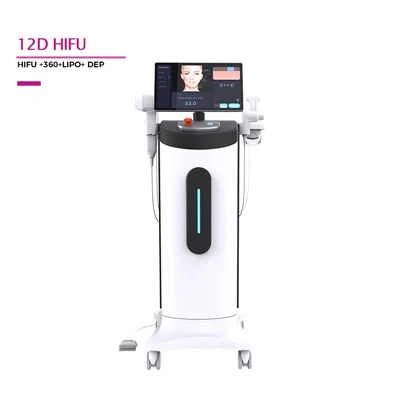
If you’re a clinic owner, dermatologist, or medical spa owner reading this, and you’re curious about adding HIFU to your services, or you have questions about how it works, which system is right for your practice, or what training looks like—we’re here to help. We work with practices of all sizes, from small local dermatology offices to large multi-location med spas, so we can find a solution that fits your needs and budget.
Youshape ID Flex RF Don’t hesitate to reach out to us for a casual chat, no pressure at all. We’re happy to walk you through any details about HIFU, our systems, and how we support our clients long after they make a purchase.
- Hill, C. R., & ter Haar, G. R. (2000). Ultrasound for non-invasive surgery. Physics in Medicine and Biology, 45(5), R1-R15.
- Kennedy, J. E. (2005). High-intensity focused ultrasound in the treatment of solid tumours. Nature Reviews Cancer, 5(4), 321-327.
- Kim, J. H., et al. (2011). Non-surgical facial rejuvenation using high-intensity focused ultrasound: A prospective, single-arm, clinical study. Dermatologic Surgery, 37(10), 1465-1471.
- Burns, P. N., et al. (2015). Safety and efficacy of high-intensity focused ultrasound for facial tightening: A systematic review. Journal of Cosmetic Dermatology, 14(3), 229-236.
Hebei Newangie Technology Co., Ltd.
Hebei Newangie Technology Co., Ltd. is one of the most professional hifu manufacturers and suppliers in China, featured by quality products and good price. Please rest assured to wholesale OEM hifu from our factory.
Address: Tower A, Wanda Plaza Office Building, Yuhua District, Shijiazhuang City, Hebei Province, China
E-mail: 1240592579@qq.com
WebSite: https://www.newangie.com/
