What are the requirements for busbars in electrical distribution equipment? Let’s cut to the chase—if you’re in the market for reliable electrical distribution gear, busbars aren’t just a afterthought. They’re the workhorses that keep power flowing safely and efficiently, and getting them wrong can lead to all sorts of headaches: overheating, voltage drops, even catastrophic failures. As a supplier that’s been in this game for years, I’ve seen firsthand how skimping on busbar specs bites folks. So let’s break down the key requirements that matter, no jargon overload, just the real deal. Electrical Distribution Equipment
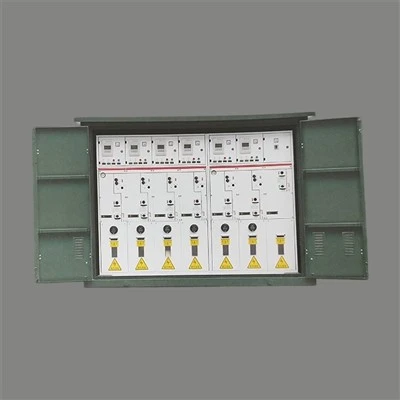
First up, material. You can’t just pick any metal for a busbar. 9 times out of 10, it’s copper or aluminum—and the choice isn’t random. Copper is the go-to for most heavy-duty setups because it has way higher conductivity, meaning less resistance when current passes through. Less resistance = less heat, which is a huge win for safety and extending the busbar’s life. Now, aluminum is lighter and cheaper, so some ops go for it, but you can’t just use plain aluminum. It has a higher oxidation rate and isn’t as strong, so you need to make sure it’s properly alloyed (like 1350-H19 for electrical use) to handle mechanical stress, especially in busway systems that get installed in tight spaces. Wait, and don’t forget tin plating—even copper busbars need that. It prevents corrosion, which builds up over time and creates loose connections, bad news for power distribution. I’ve had clients skip plating once and end up with a unit that failed after 6 months because of corroded joints—never again, right?
Next, size and current rating. This is where people mess up the most. A busbar’s cross-sectional area directly correlates to how much current it can carry without overheating. If you size it too small, the temperature spikes—way above the 140°F (60°C) max most standards call for—and that’s a fire hazard. Let’s do a quick example: a 400-amp setup needs a bigger busbar than a 100-amp one. But here’s the catch—ambient temperature matters too. If your distribution panel is in a hot garage or a server room that’s always warm, you need to upsize the busbar. I had a customer who installed a standard 400-amp busbar in a server closet that hit 90°F year-round; it overheated every time the IT gear ran full tilt. We swapped to a 500-amp one and problem solved. Also, don’t ignore short-circuit current rating (SCCR). Busbars have to handle the huge surge when a fault happens—think 10,000 amps or more—without melting or bending. That’s non-negotiable, especially for commercial and industrial equipment where downtime costs big money.
Mechanical design and installation. Busbars aren’t just flat strips. Their shape matters too—rectangular is standard, but sometimes we use busbars with rounded edges to prevent electrical arcing. Arcing happens when there’s a gap that ionizes, creating a spark that can jump between components, leading to fires or equipment damage. Rounded edges reduce that risk. Then there’s spacing. Busbars have to be far enough apart from each other and from grounded parts (like the panel box) to avoid arc flash. For low-voltage setups (under 600V), that’s usually at least ½ inch, but high-voltage needs way more. Also, mounting hardware—you can’t just screw a busbar loosely. It needs tight, consistent torque; too loose and you get a high-resistance connection, too tight and you crack the busbar (aluminum is brittle, remember?). We use torque wrenches on every busbar we install, and we always send a quick guide to our clients so they don’t make that mistake. Another thing: support. Long busbars (like those in a switchgear cabinet) need supports every few feet to prevent sagging from their own weight. Sagging can cause the busbars to touch, leading to a short circuit.
Thermal management. We touched on heat earlier, but it’s a whole separate requirement. Busbars can dissipate heat passively, but if they’re in a confined space (like a crowded distribution board), that heat builds up. So some busbars have holes or are designed with fins to increase surface area for cooling. Also, the material’s thermal conductivity is key—copper dissipates heat way better than aluminum, which is another reason it’s preferred for high-current setups. We always calculate temperature rise during our design phase; if a busbar would exceed the industry’s 30°C rise over ambient, we adjust the size or shape. I once worked on a hospital’s electrical system where thermal management was make-or-break—they can’t afford power outages during surgery, so we added extra cooling fins on the busbars and did heat tests after installation to confirm everything stayed within safe limits.
Compliance with standards. You can’t just wing it here. Busbars have to meet established rules to be safe. The big ones are IEC 61439 for low-voltage switchgear and controlgear, and NEC (National Electrical Code) in the US. NEC has specific rules about busbar sizing, SCCR, and insulation. For example, NEC says busbars must be insulated if they’re exposed in accessible areas. That doesn’t mean wrap them in any insulation—has to be heat-resistant, like cross-linked polyethylene (XLPE), which can handle the heat from the busbar itself. If you use regular plastic insulation, it’ll melt and leave the bar exposed, creating a shock hazard. We only use insulation that’s rated for the busbar’s max temperature, so clients don’t run afoul of codes.
Corrosion resistance. This is one that’s easy to overlook, but it’s a big deal, especially in harsh environments. If your distribution equipment is outside, or in a damp factory (like a food processing plant with lots of steam), the busbar has to resist rust or oxidation. That’s why plating is important—tin plating, as I mentioned before, or even nickel plating for extra tough conditions. Some of our clients in coastal areas (where salt air is a problem) go with silver plating, though that’s pricier. But even with plating, we make sure the joints are sealed with anti-corrosion compound. I had a client in a coastal warehouse skip the compound, and after a year, the busbar joints were corroded so bad they had to replace the whole panel. Lesson learned—don’t cut corners here.
Flexibility for future expansion. Let’s be real—no one’s electrical system stays the same forever. A startup might add more servers, a factory might get new machinery, so the busbar setup needs to accommodate that. That means including spare capacity in the busbar size, or having extra slots for busbar taps. Taps are where you connect other components (like breakers) to the busbar; if you don’t have enough taps or they’re not designed for easy addition, you’ll have to rework the whole system down the line. We design our busbars with 15-20% extra capacity for expansion, and we mark all tap points clearly so our clients can add components without hiring a contractor every time.
Now, let’s tie this back to being a supplier. Here’s the thing: we don’t just sell busbars—we design them to meet all these requirements. We work with clients to figure out their current load, ambient conditions, environment, and expansion plans, so we don’t send a one-size-fits-all busbar that doesn’t work. For example, if a client has a small commercial office, aluminum might be fine, but if it’s a 50,000 sq ft industrial warehouse with a 1000-amp system, copper with tin plating and proper thermal cooling is non-negotiable.
Wait, let’s address a common misconception: “a thicker busbar is always better.” No, not exactly. A thicker bar might be overkill, and thicker bars can be harder to work with, especially in tight spaces. We balance size, material, and design to get the perfect fit. It’s not just about specs—it’s about practicality.
Another point: safety for installers. Busbars are live parts once the system is powered, so they need to be designed with that in mind. For example, insulated busbars have color-coded insulation (red for phase A, black for phase B, blue for phase C, green for ground) so installers can tell which is which without risking shock. That’s a small detail but it makes a huge difference for worker safety. I’ve had installers tell me our color-coded busbars saved them from a few near-misses—simple stuff, but important.
So what happens if you ignore all these requirements? You get downtime, safety hazards, code violations, and expensive repairs. A busbar that’s too small can cause a fire in the distribution panel, which can shut down an entire business. A busbar that’s not corrosion-resistant will fail prematurely, leading to unexpected replacement costs. A busbar that doesn’t meet SCCR standards can’t handle a short circuit, leading to arc flash events that are deadly.
Now, if you’re putting together electrical distribution equipment, don’t just pick any busbar. Make sure it’s made of the right material, sized correctly for current and ambient conditions, designed for mechanical stability and thermal management, meets industry standards, resists corrosion, and allows for future expansion.

We’ve been supplying busbars for all kinds of setups—small offices, big factories, hospitals, data centers—and we know how to get this right. If you’re working on a project and need to make sure your busbars check all the boxes, feel free to reach out to talk through your needs. We can help you design a busbar system that’s safe, efficient, and built to last.
Distribution Box References
NEC (National Electrical Code) 2023 Article 408, Busways, and Cable Bus.
IEC 61439-1:2020, Low-voltage switchgear and controlgear assemblies.
Copper Development Association. (2022). Electrical Applications: Copper Busbars.
Aluminum Association. (2021). Aluminum for Electrical Distribution Systems.
OSHA (Occupational Safety and Health Administration). (2020). Arc Flash Protection Guidelines for Electrical Installations.
Shijiazhuang Nuo’an Electric Power Equipment Co., Ltd.
As one of the most professional electrical distribution equipment manufacturers and suppliers in China, we’re featured by quality products and good price. Please rest assured to buy advanced electrical distribution equipment made in China here and get pricelist from our factory. Customized orders are welcome.
Address: NW Corner, Heping Rd & Xingsingsi St, North Baifo Village, Chang’an Dist, Shijiazhuang, Hebei, China
E-mail: nuoandianli3@163.com
WebSite: https://www.nuoanpower.com/
