Alright, let’s break this down—choosing a bathroom mirror for a Japanese-style bathroom isn’t just about picking something that looks nice (though that matters!). As a bathroom mirror supplier, I’ve spent years chatting with homeowners, renovators, and even tiny-space lovers who swear by Japanese bathroom vibes. And let’s be real: Japanese design is all about balance, minimalism, functionality that feels intentional, and a dash of quiet elegance. So skip the generic, clunky mirrors you see at big-box stores—here’s the real, no-BS guide to nailing this, plus how to work with someone like me (yep, the mirror supplier!) to get it right. Bathroom Mirror
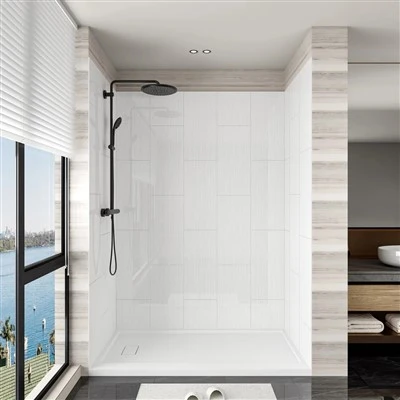
First off, let’s get what a Japanese-style bathroom actually is, because that’s the foundation here. It’s not just a little bamboo mat or a shoji screen tucked in. It’s about wabi-sabi (the beauty of imperfection), lots of natural materials (wood, stone, ceramic), neutral tones (beiges, soft grays, muted woods), and layouts that feel uncluttered. Most Japanese bathrooms (even the modern ones in Tokyo tiny apartments) separate the wet zone (shower/bath) from the dry zone (toilet/sink) with a simple partition—no fancy doors, just a sliding glass or wooden panel. So your mirror can’t fight that calm, uncluttered vibe; it needs to blend, not stick out like a sore thumb.
Now, the first big call: mirror shape. I’ve seen way too many people force a round mirror into a ultra-linear Japanese bathroom, and it just doesn’t land. Wait—does that mean no round mirrors at all? No, not if you do it right. But let’s start with the basics: Japanese design loves clean lines, so rectangular and square are the safest, most classic picks. Think about the sink you have—most Japanese bathrooms have a narrow, deep vessel sink or an under-mount sink, not that big, clunky Western vanity. A rectangular mirror that’s a little wider than the sink (but not so wide it hits the partition) feels intentional, not random. It’s like the line of the mirror completes the line of the sink—balance, right?
But what if you want something softer? Like a round mirror? Go for a small to medium round mirror, not a giant 30-inch one that takes over the wall. And make sure it has a thin, natural wood frame—no thick, gold plastic frames, that’s too flashy. A round mirror with a light oak frame above a narrow sink feels gentle, not loud. Pro tip from me: if your bathroom has a shoji screen nearby, match the wood tone of the frame to the shoji’s wood. That’s the little detail that makes it look like it belongs, not like you grabbed it from a random home goods store.
Next up: frame vs. frameless. This is a huge one for Japanese style. Let’s be clear—frameless mirrors are not a free pass. Wait, but why? Japanese design is about natural materials, so if you have a stone countertop or a wooden cabinet, a plain frameless mirror can feel cold. But a framed mirror? The frame should be simple, thin, and made from a natural material—no metal frames (unless they’re super matte black, like a rain gutter, that works sometimes). My go-to frames for Japanese bathrooms are solid light oak, cedar, or even bamboo (but bamboo has to be sealed really well, because bathrooms are wet). Avoid any frames with carvings, patterns, or bright finishes—keep it flat, sanded smooth, no frills.
Wait, what if your bathroom is ultra-modern Japanese, like a condo with concrete walls? Then a matte black frameless mirror works, because concrete is industrial, and matte black complements it without being harsh. But skip the shiny chrome—too sterile. Another thing: if you go framed, make sure the frame isn’t too thick. A 1 to 1.5-inch thick wood frame is perfect; anything thicker feels bulky, and that’s the opposite of Japanese minimalism. I had a customer last month who picked a mirror with a 4-inch thick teak frame for her tiny Tokyo-style bathroom, and she ended up returning it because it made the space feel cramped. Oops—lesson learned.
Then there’s the wet zone vs. dry zone. This is specific to Japanese bathroom layouts, and it’s a mistake I see so many people make. The wet zone is where the bath and shower are—super humid, lots of moisture. Your mirror shouldn’t go there, right? Wait, but what about the steam? Oh, right—steam is the enemy of any mirror, but especially in Japanese bathrooms where people often take long, relaxing baths. So if your mirror is in the dry zone (the area with the sink, away from the shower), that’s fine. But if you have to have a mirror near the wet zone (like a small apartment where there’s no partition), you need a mirror with a good anti-fog coating. Not the cheap anti-fog that wears off after a month—go for a professional-grade one that’s built into the mirror, not just a spray-on. I stock these because I know how important steam is here; my anti-fog mirrors use a thin heating element behind the glass that’s barely noticeable, so it doesn’t mess with the look.
Size matters, too, but not the way you think. Japanese bathrooms are often smaller than average Western bathrooms—like 5×8 feet or something, not 10×12. So a giant mirror that spans the entire wall is a no-go; it makes the space feel like a locker room, not a calm bath space. Instead, size the mirror to the sink area. If your sink is narrow (like 18-24 inches wide), the mirror should be 20-26 inches wide max. If you have two sinks (rare in Japanese bathrooms, but happens), keep each mirror separate, not a big double mirror. And height: hang the mirror so the center is at eye level for the tallest person in the house—standard, but don’t hang it too high above the counter. If there’s 8 inches or more between the counter and the mirror, it looks unfinished.
Another big thing: finish. The mirror’s glass itself—skip the distorted, cheap glass you get at dollar stores. You want a clear, optical-grade glass. Wait, why? Because when you’re doing your skincare routine (super important in Japanese bathrooms—they take skincare seriously!), you need to see clearly. Also, avoid mirrors with a “warm” tint that makes your skin look yellow; go for neutral, clear glass. And if you want a little extra, a mirror with a subtle bevelled edge? That’s fine, but only if it’s thin—like a 1/8 inch bevelled edge, not a thick, flashy one. No decorative edges, no etchings—keep the glass plain, save the decor for the rest of the bathroom.
Wait, what about storage? Oh right, Japanese design is all about hiding clutter. A lot of people want a mirror that doubles as storage, and that’s actually a great pick for Japanese-style bathrooms. But not those big, bulky mirrored cabinets that look like they belong in a hospital. Go for a slim, wall-mounted mirrored cabinet with a wood frame—thin doors, built-in lighting that’s soft, not harsh. The storage is for your skincare products, cotton balls, whatever, so you don’t have clutter sitting on the counter. That’s the wabi-sabi vibe—calm, uncluttered space. I make a few of these slim mirrored cabinets for exactly this reason; they’re only 4 inches deep, so they don’t stick out into the room, perfect for small Japanese bathrooms.
Lighting is tied to the mirror, too, and it’s make-or-break. Japanese bathrooms use soft, warm lighting—no harsh fluorescent lights. So if your mirror has built-in lights, they should be LED, 2700K (warm white), not 5000K (cool white). And the lights should be on the sides of the mirror, not above it. If you have lights above, they cast shadows on your face, which is bad for skincare and makeup. Sconces on either side of the mirror, at eye level, that’s the classic Japanese way. But if you don’t want separate sconces, a mirror with integrated side LED strips (hidden, so you don’t see the bulbs) works too. Avoid backlit mirrors—they’re too modern, too flashy, not Japanese at all.
Wait, let’s talk about material durability, because Japanese bathrooms are wet, and humidity is high. If you get a wooden frame, it has to be properly sealed, right? I’ve had customers come to me with mirrors they bought from other places that had cedar frames that warped after 6 months in the bathroom. That’s because the cedar wasn’t treated with a water-based sealant, not a oil-based one (oil-based sealants can give off fumes in a small bathroom). All my wooden frames are sealed with a matte, water-based polyurethane that’s safe for wet areas, so they won’t warp, crack, or get moldy. And if you go frameless, make sure the mirror has a rust-proof backing—no metal that will corrode from steam. I use aluminum-backed mirrors, not cardboard or plastic backings, so they last for years.
Let’s throw in some real examples, from people I’ve worked with. Last year, a guy in Brooklyn renovated his bathroom to be Japanese-style, with light oak cabinets, a deep soaking tub, and a small rain shower. He originally picked a round, brass-framed mirror—yikes, brass is too shiny, round was too big. He swapped it for a rectangular 24-inch wide mirror with a thin light oak frame, hung above his narrow 20-inch sink, with side LED sconces. He texted me later saying it totally transformed the space—no more cramped, clunky vibe, it felt calm and intentional. Another customer in Portland had a tiny apartment Japanese bathroom, no partition between shower and sink, so she got my anti-fog frameless mirror with a matte black backing, and it worked perfectly—no fog, and it blended with her concrete countertop.
Now, here’s the part I can’t skip: working with a mirror supplier (that’s me, fyi) to get this right. A lot of people just pick a mirror off Amazon, but the problem is, generic mirrors don’t account for the specific needs of a Japanese bathroom—humidity, small spaces, natural materials. When you reach out, I’ll first ask you about your bathroom layout: is the sink in a dry zone or near the shower? What’s the material of your cabinets and countertop? What size is your space? Then I’ll help you pick the right shape, frame, and finish. If you need a custom size (super common for narrow Japanese-style sinks), I can do that too, no extra hassle. And if you’re worried about shipping? All my mirrors are packaged with foam to prevent damage, and I include a simple mounting kit that works for both drywall and tile, so you don’t need to call a handyman.
Wait, let’s wrap this up with the key takeaways so you don’t forget, because this is a lot. 1. Shape: Stick to rectangular/square for classic Japanese, small round only if you want softness. 2. Frame: Natural, thin wood (oak/cedar) or matte black metal, no thick plastic or carvings. 3. Zone: Mirror in dry zone only, get anti-fog if it’s near steam. 4. Size: Match to sink, no giant wall-spanning mirrors. 5. Finish: Clear optical glass, neutral light, no harsh tints. 6. Bonus: Mirrored storage is a win for uncluttered spaces.
And hey, if you’re still stuck—like, you have a weirdly narrow sink and don’t know what mirror fits, or you need a custom frame that matches your shoji screens—just reach out. I don’t do pushy sales stuff, I’m here to help you get exactly what fits your Japanese-style bathroom, no overpaying.
Bathtub References: Japanese Home Association. (2021). Design Principles of Modern Japanese Bathrooms. Tuttle Publishing; Mori, S. (2019). Wabi-Sabi Living: Creating Calm, Uncluttered Spaces. Kodansha USA; International Organization for Standardization. (2020). Hygrothermal Performance of Building Materials – Mirrors for Wet Areas. ISO 15686-5:2020.
MCOCOD LLC
MCOCOD LLC is a USA-based bathroom mirror supplier, mainly engaged in providing high quality custom glass doors and frameless tempered glass. We warmly welcome you to buy durable bathroom mirror in stock here online! If you have any enquiry about installation and free shipping, please feel free to email us.
Address: 12781 Schabarum Ave Irwindale, CA 91706
E-mail: info@usamcocod.com
WebSite: https://www.mcocodplus.com/
