If you’ve ever stepped into a substation control room or an industrial facility’s power distribution hub, you’ve likely seen a high-voltage (HV) switch sitting in a dim, climate-controlled enclosure. These switches are the gatekeepers of electrical power: they isolate fault sections, route power during maintenance, and prevent catastrophic overloads. But before a switch is installed, and every few years after that, it needs a precise, reliable check — that’s where an HV switch tester comes in. As someone who’s supplied these testers for over a decade, I get the same question at least once a week: “Is it difficult to operate an HV Switch Tester?” HV Switch Tester

It’s a fair question. High-voltage equipment lives at the edge of what’s safe for human interaction, and missteps in testing can lead to costly delays, safety hazards, or even false results that leave a switch unfit for service. The short answer? It’s not difficult — but it does require the right foundation, the right tool, and a focus on process, not just tech. Let me break this down the way I do with every new client, from a small industrial plant’s maintenance crew to a large utility’s field service team.
First, let’s set the record straight: modern HV switch testers are nothing like the clunky, purpose-built machines of the 1990s. Back then, testing required two people, specialized training, and hours of manual data logging. Today’s models — including the ones we design and supply — are built with user-centric interfaces, automated workflows, and safety features that eliminate most of the old pain points. That’s not marketing hype; it’s the result of listening to operators who used to spend three days on a single test. For example, our latest testers come with a color touchscreen that walks you through every step, from selecting the switch type (circuit breaker, disconnector, load break switch) to entering basic site-specific details. The screen highlights warnings, confirms safety gaps, and doesn’t move to the next step until you’ve addressed potential risks. That’s not “hard” — that’s guided.
But let’s get specific about what “operation” actually entails. Most people think testing means hooking up wires and pressing a button. That’s the final 10% of the process, but the first 90% is preparation, and that’s where confusion can creep in — especially for teams that only test HV equipment a few times a year. Let’s walk through a real-world example I saw last month, with a team from a mid-sized food processing plant. They were testing a 15kV circuit breaker they’d installed in their new distribution center. The crew had a brand-new tester from our catalog, and they were nervous about high-voltage connections. We talked them through it over a 15-minute video call.
First step: safety. That’s non-negotiable, and all modern testers enforce it. The tester won’t let you activate a test if its own safety interlocks aren’t engaged, and it won’t charge the test circuit unless your ground connections are properly seated. The plant crew had tripped up here: they were used to testing low-voltage equipment, where grounding is a quick step, but HV requires a dedicated, low-resistance ground clamp. The tester’s screen had flashed a red alert when they tried to proceed, so they fixed the ground, and the alert cleared. No stress, no hazard, just a system that stops you before you make a mistake.
Next, connection setup. This is where people often get intimidated, but it’s simpler than it sounds when you’re using a tester designed for field work. HV switch test connections typically involve three things: a power lead to the switch’s control circuit, a voltage tap to measure the switch’s contact timing, and a current lead to measure arcing during operation. Our testers use color-coded, quick-release connectors that only fit their matching ports, so you can’t plug a voltage lead into a current port (a common mistake that would skew results or damage equipment). The plant crew said it took them 10 minutes to connect everything — a job that would’ve taken 45 minutes with their old tester, which had loose, unlabeled wires.
Once connected, the testing itself is automated. You select a test type: timing test, contact resistance test, insulation resistance, or a full operational cycle. The tester runs the test in minutes, not hours, and stores the data automatically. The team didn’t have to manually record 20+ readings — the tester generates a report right on the screen, with a pass/fail flag. When we got off the call, they sent a text saying they’d finished the test in under an hour, which they’d originally estimated would take three.
So why do some people find HV switch testing difficult? The two biggest barriers are a lack of regular training and using outdated, poorly designed testers. I’ve worked with teams that have been using the same 20-year-old tester for decades — these machines lack the safety interlocks, guided workflows, and automated features of modern models, so operators have to memorize dozens of steps. That’s not a fault of testing HV equipment; that’s a fault of using equipment that’s not built for modern operations. Another common issue: teams only test HV equipment once every three years, so they don’t keep their skills sharp. HV switch operation basics, like understanding switch nomenclature or test standards, aren’t intuitive, but a good supplier will help with training — in fact, we include one-on-one training for every client, either on-site or via video, when they take delivery of a tester.
Let’s touch on safety, because that’s the part that makes people nervous. A common myth is that HV switch testers expose operators to dangerous voltages. Modern testers are designed with built-in isolation: the test circuit is separated from the operator’s area, and all high-voltage connections are fully enclosed during testing. The tester will even cut power instantly if it detects a fault, like a loose connection or unexpected voltage spike. In over 10 years of supplying testers, we’ve never had a report of a safety incident linked to our equipment — that’s because we build safety into every step of the operation, not just as an afterthought.
I also want to address the elephant in the room: compliance. HV switch testing has to meet strict industry standards — IEEE, IEC, and local utility regulations, for example. If your test results don’t align with these standards, your switch might not pass inspection, leading to fines or shutdowns. Here’s where modern testers shine: they come pre-loaded with standard-compliance protocols, so you don’t have to manually adjust every test parameter to meet IEC 62271 or IEEE C37 standards. The plant crew I mentioned earlier said their old tester would only run “generic” tests, so they had to cross-reference their results with a 200-page compliance manual mid-test — a process that often led to errors. Our tester pulled the correct parameters automatically, so they didn’t have to guess if their test was valid.
Now, let’s talk about what you actually need to operate an HV switch tester, no fancy degree required. Most operators only need a high school diploma and basic electrical literacy — meaning they can read a wiring diagram and follow step-by-step instructions. A lot of our clients are maintenance technicians who’ve been working with electrical equipment for 5+ years; after a 30-minute training session, they’re fully operational. The only time we’ve seen teams struggle is when they’re new to electrical work entirely — and even then, the guided interface takes most of the guesswork out of it. For more complex testing, like for extra-high-voltage (EHV) switches, we offer advanced training modules that go deeper into analysis, but that’s for specialized teams, not routine testing.
I should also mention support. If you run into a problem, you don’t have to troubleshoot alone. Our team is available 24/7 for field support — we’ve walked operators through connection issues in the middle of a remote plant, and helped teams recover corrupted test data. One client in a rural mining area once had a tester that wouldn’t connect to a Wi-Fi network to save reports; our support team talked them through adjusting a single setting, and they were back to work in 10 minutes. That’s the kind of support that makes operation easier, even when you’re in a challenging location.
So, to circle back to the original question: Is it difficult to operate an HV Switch Tester? It doesn’t have to be. The key variables are the equipment you use, the training you get, and the support your supplier provides. Outdated, unforgiving testers and no training will make it hard — but modern, user-centric testers paired with supplier support? It’s a routine task, not a specialized hurdle.
If you’re evaluating HV switch testers, don’t just look for a machine that can run tests — look for one that simplifies the process, keeps you safe, and aligns with your industry’s compliance needs. Whether you’re testing a 15kV circuit breaker in a food plant or a 110kV disconnector in a utility substation, the right tester turns what could be a stressful, error-prone job into a straightforward, fast task.
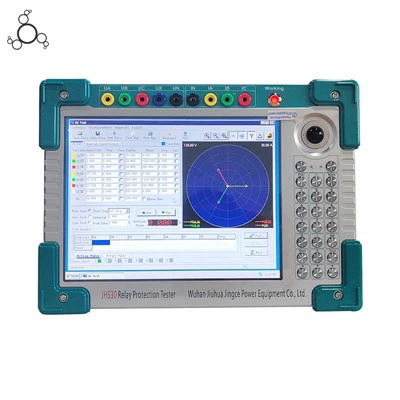
For more details on our HV switch tester models, training programs, and how we can support your testing operations, reach out to our team to discuss your specific needs. We’re here to help you find a solution that fits your facility, your crew, and your compliance requirements.
Transformer Winding Resistance Tester References
- IEEE Std C37.09-2019, “Standard Test Procedures for Circuit Breakers”
- IEC 62271-100:2020, “High-voltage switchgear and controlgear – Part 100: Alternating-current circuit breakers”
- “Maintaining High-Voltage Switchgear: Best Practices for Field Testing”, Electrical Construction & Maintenance, 2022
- Occupational Safety and Health Administration (OSHA), “Electrical Safety-Related Work Practices for High-Voltage Equipment”, 2021
Wuhan Jiuhua Jingce Power Equipment Co., Ltd.
As one of the most experienced hv switch tester manufacturers in China, we offer a wide range of products with superior quality. Please feel free to wholesale bulk durable hv switch tester from our factory. For price consultation, contact us.
Address: 601,Unit 1,Building D4-02,Optics Valley Center,303 OpticsValley Avenue,Wuhan
E-mail: market@wuhanjhjc.com
WebSite: https://www.powertransformertester.com/
