If you’ve ever worked with HF welding—whether you’re fabricating PVC tarps, inflatable boats, or even those shiny promotional display signs—you’ve probably found yourself asking the same question again and again: “How fast can I actually run this machine without messing up the weld?” As someone who’s been an HF welding machine supplier for over a decade, I get it. Speed feels like a magic number: go too slow, and you’re wasting time that could be used to fill orders; go too fast, and you end up with weak, wonky welds that get returned, costing you more in the long run than any extra speed saved. Let’s break this down like we chat with customers at trade shows—no confusing jargon, just real, actionable stuff that actually works. HF Welding Machine
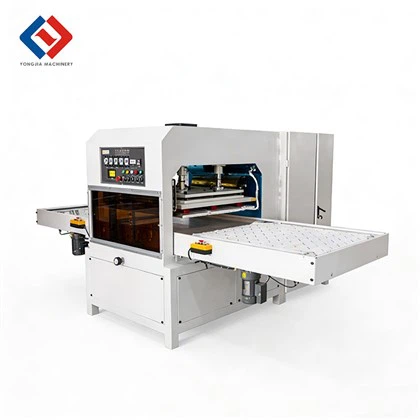
First, let’s make sure we’re on the same page about what HF welding even is, because a lot of folks mix it up with regular old hot-air or ultrasonic welding. HF stands for high frequency, usually between 10 and 100 MHz (think radio waves, not sound waves). These high-frequency electromagnetic fields make the molecules in materials like PVC, PET, or vinyl vibrate really fast, creating friction that melts the material from the inside out. No external heat needed, which is why it’s perfect for thick or flexible plastics that don’t bond well with other methods. That internal melting is also why speed matters so much here—your weld’s quality depends on how evenly that heat builds up and sets, not just how quickly the machine moves.
Now, the big question: what’s the actual speed limit? The short answer is, it’s not a one-size-fits-all number. I’ve seen some guys cranking out 100 feet per minute (fpm) on thin, 6-gauge PVC and nailing perfect welds every time, while others struggle to hit 20 fpm on thicker 14-gauge material and end up with gaps. So let’s talk about the factors that move that speed needle—because those are the things you can actually control, not just a random “max speed” number a manufacturer puts on a spec sheet.
First up: material thickness and type. This is the biggest one, hands down. Thin materials (under 10 mils, or 0.25 mm) heat up super fast with HF energy. I once had a customer welding 4-mil vinyl for window decals who was running 85 fpm, and he was killing it. But thick stuff—like 20-mil PVC for truck bed liners or 30-mil inflatable raft material—needs way more time for the heat to penetrate through the entire material and fuse the two layers together. If you try to run that thick material at 50 fpm, the outside might melt, but the center will stay cold, so the weld will pull apart after a week. We usually tell customers: for every 5 mils of thickness, drop your speed by about 10 fpm. So 5 mils = 50 fpm, 10 mils = 40 fpm, 15 mils = 30 fpm, and so on. But that’s just a starting point—your material’s plasticizer content changes things too. Flexible PVC has more plasticizers, which make it heat faster, so you can usually go a bit faster than rigid PVC. We had a customer welding flexible 12-gauge PVC for pool covers at 45 fpm, which was way above the starting point, and his welds held up through winter storms.
Next factor: your machine’s power output. This is where a lot of people get tricked by cheap, low-power HF machines. A 2 kW portable HF welder isn’t going to hit the same speed as a 10 kW industrial roller welder for thick materials. Think of it like a car engine: a tiny 4-cylinder can’t haul a semi-truck up a hill as fast as a V8. I’ve seen a customer buy a super cheap 3 kW HF machine to weld 15-mil tarps. He tried running 35 fpm, and the machine was sparking so bad it tripped the circuit breaker. We swapped him to a 7 kW machine, and he’s now running 32 fpm with zero issues. More power means you can add more HF energy to the material faster, so you don’t have to move as slow to get a proper melt. But here’s a tip: don’t oversize your power. If you’re welding thin material, too much power will burn holes in the material, even if you’re going slow. The sweet spot is matching your machine’s power to your material’s thickness—our sales team always asks customers for material specs first before recommending a machine, because guessing leads to wasted money on a machine that’s too weak or too strong.
Then there’s the welding tool itself—aka the electrode or die that does the actual pressing and heating. A lot of people overlook this, but the size and shape of your electrode makes a huge difference. A small, narrow electrode (like the ones used for small decals) concentrates the HF energy in a tiny area, so it heats up fast. That means you can run faster than with a wide electrode, which spreads the energy out more. Also, how smooth or sharp the electrode is? Wait, no—actually, the contact is key. If your electrode is worn down, or has a build-up of plastic residue on it, it won’t conduct the HF energy as well, so you have to slow down to make up for it. I had a customer who was running a 20-fpm speed on 10-mil material, which was way too slow. He brought his machine in for a tune-up, and we polished his electrode and replaced the pressure rollers. Once we did that, he was hitting 38 fpm with way better welds. Dirty tools = slow speed, simple as that.
Pressure is another one you can’t sleep on. HF welding isn’t just about heat—you need to press the two material layers together while they’re melted, so they bond. If you’re running too fast, and your pressure is too low, the melted material doesn’t have time to fuse. I see this all the time with new operators: they crank the speed up to test it, but their pressure rollers are set too light, so the welds look okay on the surface but peel off easily. We usually tell folks to adjust pressure until the two layers have a tiny bit of squeeze-out (that thin strip of melted plastic coming out the sides of the weld) at the slow end of your speed range. Then, as you increase speed, you can bump up the pressure a little—just enough to make that squeeze-out without flattening the material too much. Too much pressure, though, and you’ll squish all the heat out of the material, leading to weak welds even at slow speeds. It’s a tight balance, but once you get it right, speed can go way up.
Now, what about common myths? A lot of guys think the max speed is the number the machine’s display shows, but that’s not a real limit—that’s just the fastest the machine’s motor can move. But that doesn’t mean the weld will be good. I once had a customer brag he was running 100 fpm on a industrial machine, but when he brought his parts in, the welds were so weak you could pull them apart with your fingers. The motor was moving fast, but the heat and pressure were too low—so it was just moving, not welding. Another myth: “older machines are slower than new ones.” Sure, new machines have better power controls, but I’ve seen a 15-year-old roller welder from our shop run just as fast as a brand new one, as long as it’s been maintained. We have customers who’ve had our machines for 12 years, and they’re still running the same speed as day one—because we do regular tune-ups, and they clean the electrodes every week.
So what’s a practical, safe max speed you can test? Let’s say you’re a new operator, just setting up a machine for the first time. Start at a super slow speed—like 10 fpm. Make a test weld, cut it open, and check the inside: it should be a uniform, smooth melt, no gaps, no un-melted plastic in the center. If that’s good, bump the speed up 5 fpm. Make another test weld. Repeat until you see gaps or burnt material. That’s your speed limit for that material, machine, and tool. For thin material, that’s usually between 60 and 90 fpm; for medium (10-15 mil), 30 to 50 fpm; for thick (over 15 mil), 10 to 30 fpm. But again, that’s just a starting point—play with pressure and power, and you can push that number a bit without ruining weld quality.
Wait, let’s talk about real-world examples from customers I’ve worked with, because that’s way more useful than rules. Last year, we had a customer who makes inflatable stand-up paddleboards. They were using 18-mil PVC, and initially running at 18 fpm, which was slow and making them miss their production deadlines. We swapped them to a 9 kW roller welder (they had a 5 kW before, which wasn’t enough) and showed them how to polish their electrodes and adjust pressure. Within a week, they were running 28 fpm, and their weld defect rate dropped from 8% to less than 1%. Another customer, who makes 4-mil vinyl stickers, was running 90 fpm and having a lot of burnt edges. We adjusted their power from 1.5 kW to 1 kW (since the thinner material didn’t need as much heat) and told them to clean their electrode twice a day. Now they’re running 82 fpm, no burnt parts, and shipping 20% more stickers each day.
What about mistakes to avoid when trying to speed up? The biggest one is rushing without testing. I’ve had customers blow a $200 roll of material because they cranked the speed up to max without making a test weld. Always test first—even if you’re using the same material you’ve been welding for years. Material batches can change a little (different plasticizer amounts, slight thickness variations) so always do a test weld before you switch to full production. Another mistake: ignoring maintenance. If your machine is making weird noises, or the power gauge is flickering, don’t keep running it fast. Bring it in for a service, or check the power cable—loose connections can make the machine’s output inconsistent, so you have to slow down to compensate.
As a supplier, our goal isn’t to sell you a machine that hits a fancy speed number—it’s to give you a machine that lets you balance speed, quality, and cost. That’s why we never just tell a customer “max speed is X” without asking about their material, their production goals, and what they’re making. If you’re a small shop making occasional tarps, a portable HF welder with a 2 kW output might be perfect, and you’ll run at 25-35 fpm. If you’re a big factory making inflatable pools, you need an industrial roller welder with 10-15 kW, and you’ll run at 30-45 fpm. There’s no right or wrong, just what works for your setup.

If you’re currently struggling with weld speed—whether you’re going too slow and missing deadlines, or too fast and having defects—we can help. We’ll walk through your material specs, your current machine, and what you’re making, to help you find that sweet spot where speed and quality meet. No sales pitch, just real advice from people who’ve been in the welding game for years. Hit us up to chat through your setup, and we’ll point you in the right direction.
Fully Automatic Production Line References
- Welding Handbook, Volume 4: Special Welding Processes, American Welding Society, 2021
- High Frequency Welding of Thermoplastics: Principles and Applications, Elsevier, 2019
- Industrial HF Welding Machine Performance Guidelines, International Association of Plastics Fabricators, 2022
Dongguan Yongjia Machinery Equipment Co., Ltd.
We are one of the most reliable hf welding machine manufacturers and suppliers in China, specialized in providing high quality customized service. Please feel free to wholesale advanced hf welding machine at low price from our factory. For quotation, contact us now.
Address: No. 240, Chashan South Road, Chashan Town, Dongguan City, Guangdong Province, China
E-mail: info@yjwelding.com
WebSite: https://www.yjhighfrequencymachine.com/
