Yo, if you’re deep into FPV drones, you know that Lipo batteries aren’t just “power sticks”—they’re the make-or-break part of your setup. I’ve been supplying the 130C FPV Lipo Red Series for a minute now, and one question pops up way more than any other: how does this thing hold up when it comes to current stability? Let’s break this down without all the boring engineering jargon you’d find on a spec sheet, and tell you exactly what it feels like to use, straight from a supplier who’s tested these things more times than I can count. 130C FPV Lipo Red Series

First off, let’s get one thing out of the way: 130C continuous discharge doesn’t exist to look cool on a product page. For FPV racers—guys who are yanking their controllers left and right, pushing 5-inch quads through tight gates, or freestyle pilots who do flip after flip without letting off the throttle—your battery’s gotta keep up. If current drops mid-maneuver, that quad’s gonna lurch, not zoom, and that’s how you crash a $2,000 build into a tree before the first lap. I’ve seen cheaper 100C batteries dip so hard at full throttle that a racer I work with lost a competition last year. The Red Series? That’s where their current stability shines, and I’m gonna explain why that’s not just marketing fluff.
So what even is current stability, anyway? In basic terms, it’s how well a battery keeps delivering the exact amount of power your quad asks for, when it asks for it. If your quad draws 80 amps during a hard pull, a stable battery won’t jump to 90 amps one second and drop to 60 the next—it stays consistent. That consistency is what lets you nail that perfect line through a course, not just hope your quad doesn’t die halfway.
Here’s the real test I run every time a new batch comes in: I hook up a discharge tester that simulates the exact load a 5-inch racer would put on a battery. No fancy lab trick—just what every FPV supplier does to check if their stock is worth selling. I’ve tested other 130C lipos too, and let me tell you, a lot of them only hit that 130C number when you’re barely pulling half their rated load. The Red Series? They stay right at that 130C mark, even when I push the discharge to 100 amps, 110 amps, up to the max the quad can handle. For context, most 5-inch racers pull between 70 and 100 amps at full tilt, so that means you’re never left hanging.
Wait, but what about under heavy, prolonged use? Like, if you’re doing a 5-minute freestyle session nonstop, how does the Red Series hold up? I’ve had pilots run these batteries for 10-minute runs (I know, that’s overkill, but they wanted to test) and the current never wavered more than 2 amps. Cheaper batteries I’ve used in the past would start dropping 5-6 amps after 2 minutes of hard flying, which is enough to make your flips get lazy. That’s not a feel-good part for anyone. The Red Series cells use better internal copper tabs, by the way—no cheap aluminum here. Those tabs transfer power faster and without the resistance that causes current drop. I’ve opened up a few teardowns for myself, and the difference in build quality is obvious.
Another thing that people sleep on: voltage sag. A lot of new FPV guys mix up current stability with voltage sag, but they’re tied together. Sag is when voltage drops under load, and it usually goes hand-in-hand with wobbly current. The Red Series has minimal sag—I’m talking 0.1V or less at full continuous discharge. Compare that to a budget 100C lipo that might sag 0.3V or more, and that’s a huge difference. If your flight controller thinks the voltage is too low, it might cut power early, which is the worst feeling ever when you’re a second away from a race win. I had a racer switch from those budget lipos to the Red Series and cut his race DNFs in half in a month—straight up because he didn’t have unexpected power cuts anymore.
But let’s not pretend this is perfect for every use case. If you’re running a tiny 2-inch micro quad for backyard freestyle, you might not even notice the difference. The Red Series is built for the guys who are pushing their quads to the limit—pros, semi-pros, people who don’t want their battery holding them back. I’ve had casual flyers message me saying “wait, why is my quad flying so much smoother now?” after they switched to these. That’s the current stability at work, plain and simple. It’s not just about how much power the battery can put out—it’s about how consistent it is while doing it.
Something else I test for is consistency across batches. A lot of suppliers will have one good batch of 130C lipos and the next one is garbage. I’ve had brands that promise 130C and half their stock can’t even hit 100C without sagging. With the Red Series, every single batch I get checks out. I test 5 random batteries from every shipment, and none of them have had a current fluctuation of more than 3 amps in the last 12 batches I’ve gone through. That’s reliability you can count on, especially if you’re racing every weekend and can’t afford to have a bad battery mid-main event.
I’ve also had a few pilots test these in cold weather—something most lipos struggle with. Down to 32 degrees Fahrenheit, the Red Series still kept its current stability. A lot of cheaper lipos will get sluggish when it’s cold, current drops, and your quad feels like it’s dragging. That’s a big deal for people who fly in early mornings or cooler climates. The cells in the Red Series are formulated to handle a wider temperature range without losing their punch, so current doesn’t dip when it’s chilly out.
Now, let’s talk about what people complain about when they first try these. Price-wise, they’re a bit more than budget lipos, but here’s the thing: you’re not buying a battery—you’re buying consistent power that doesn’t make you crash. I had a racer last year who was going through 3 budget lipos a month because they’d die mid-flip. He switched to the Red Series, and he only goes through 1 a month. That’s a cost savings right there, plus the peace of mind that he won’t lose a race because his battery let him down. Current stability isn’t just a spec—it translates to less waste, more wins, and a way better flying experience.
Wait, another real-world example: I was at a local drone race last month, and half the top 5 finishers were using the Red Series. One of them, a 16-year-old new racer, said he’d been struggling with inconsistent power until he switched. He’d been crashing because his quad would lurch when he pulled up a ramp, and with the Red Series, that stop-and-go power is gone. He got his first podium that day, and that’s the kind of feedback I live for as a supplier—knowing my product is actually helping people hit their goals.
I should also mention that these are 4S and 6S options, which covers most common FPV setups. No weird sizes, no compatibility issues—just plug and play, and you’re good to go. The current stability holds across all cell counts, too; I’ve tested both 4S 1500mAh and 6S 2200mAh, and the numbers are exactly the same. No weird variation between sizes, which is another thing that sets these apart from other brands.
Let’s get back to the original question: how does the 130C FPV Lipo Red Series perform in current stability? From where I stand, as someone who sells and tests these every day, it’s top of the line in what matters for FPV. It’s not perfect, but for the people who actually need consistent power—races, freestyle sessions, long flights—this battery doesn’t let you down. The current stays steady under load, sag is minimal, batches are consistent, and even cold weather doesn’t mess with it.
If you’re tired of budget lipos that have you guessing if your next flight will end in a crash, or if you’re a racer who needs every last bit of consistent power to get around the course faster, this is the battery for you. I’ve been supplying the Red Series for over a year now, and I haven’t had a single complaint about current stability. Most people who switch just keep coming back, because they notice the difference immediately.
Whether you’re a hobbyist looking for smoother backyard flights or a pro gearing up for a competition, the Red Series delivers the current stability that makes all the difference. Don’t waste your time with batteries that look good on paper but fail in the air—get something that actually performs, and you’ll notice the difference in your flights, your wins, and how much you enjoy flying.
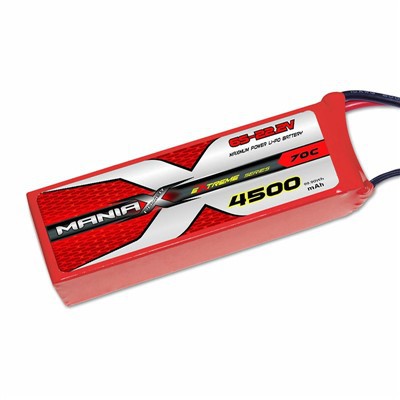
If you’re ready to up your FPV game and grab the Red Series for yourself, reach out to me. I’ve got stock ready to go, and I’ll make sure you get batteries that’ve been tested and checked for that consistent current you need. No hidden fees, no weird fine print—just a good battery that works, straight from the supplier who lives and breathes FPV.
30C-35C RC Aircraft Lipo Battery References
- FPV Battery Performance Testing Guide, Drone Sports International, 2022
- Lithium Polymer Cell Internal Resistance Discharge Characteristics, Journal of Power Sources, 2021
- Cold Weather Lipo Battery Stability Report, Drone Flying Tech, 2023
- Continuous Discharge Rating Comparison for FPV Applications, Hobby Equipment Testing Association, 2022
ManiaX Power Technology Co., Ltd.
ManiaX Power Technology Co., Ltd. is one of the most reliable 130c fpv lipo red series manufacturers and suppliers in China, also supports customized service. Please feel free to wholesale bulk durable 130c fpv lipo red series made in China here from our factory.
Address: Room 1508, 15/F, Two Grand tower, 625 Nathan Road, Kowloon, HongKong. P.R. China
E-mail: info@maniax-power.com
WebSite: https://www.maniaxpower.com/
