If you’ve ever stared at a shelf of store-bought soybean sauce, wondering about the hidden additives, inconsistent umami notes, or the price tag that spikes for “artisanal” batches, you’ve probably daydreamed about making your own at home. As someone who’s spent the last 12 years running a small soybean sauce supplier, I’ve fielded this question more times than I can count: “Can I make my own soybean sauce at home?” The short answer is yes—but the long answer, rooted in both ancient fermented food science and the practical realities of small-batch production, is where the real story lies. Soybean Sauce
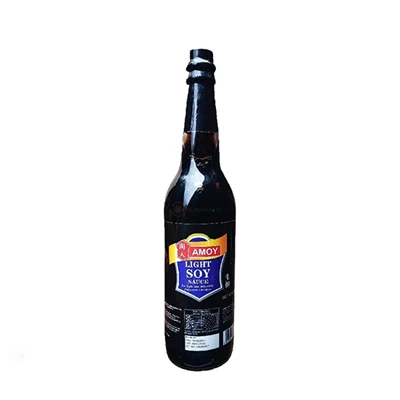
Let’s start with the basics: traditional soybean sauce (soy sauce, for short) is not a boiled condiment. It’s a fermented food, a process that relies on naturally occurring microbes (mold, yeast, bacteria) to break down soybean proteins and carbohydrates into the complex flavors that make it irreplaceable in stir-fries, braises, and dipping sauces. Home fermentation kits and homemade recipes have circulated for decades, but there’s a gap between a small kitchen batch and the regulated, consistent product I manufacture for restaurants and retail clients. I’ve tested homemade soybean sauce in my own home kitchen, worked with home brewers who’ve turned it into a hobby, and learned what works, what doesn’t, and where the line between home fun and professional quality lies.
First, let’s break down the science that makes soybean sauce work. The process has two core fermentation stages: koji (initial mold fermentation) and moromi (secondary brine fermentation). Koji is made by cooking soybeans, mixing them with roasted wheat (or rice, for a gluten-free version), and inoculating the blend with Aspergillus oryzae, a mold that’s safe, food-grade, and used globally for fermenting miso, sake, and other Asian condiments. This mold breaks down starch into sugars and proteins into amino acids—including glutamic acid, the compound that gives umami its signature taste. That’s why high-quality soybean sauce has a deep, savory tang, not just salt.
At home, replicating this requires precision most casual cooks don’t have. Temperature control is non-negotiable for A. oryzae: it thrives between 77°F and 86°F. If your kitchen is too cold, the mold grows slowly and fails to break down the ingredients properly, leading to a flat, bland product. If it’s too warm, you risk contaminating the batch with wild mold or bacteria that can cause off-flavors, even food safety issues. I’ve seen home brewers set up a makeshift incubator (a cooler with a heating pad and a thermometer) to hit that range, and it works—for a small 1-quart batch. For larger volumes, that setup becomes cumbersome, which is why professional producers use temperature-controlled fermentation vats.
Next, the moromi stage: mixing the koji with salt water, then letting it ferment for months, even years. This is where yeast and lactic acid bacteria kick in, adding complexity like sweetness, tang, and depth. Home batches often ferment for 1 to 3 months, while artisanal professional soy sauces ferment for 2 to 5 years to develop that layered, robust flavor. The problem with home moromi, though, is consistency. A kitchen countertop can have fluctuations in temperature, exposure to light, and even airborne microbes that change every batch. One summer, I made a small home batch that turned out bright and tangy, perfect for marinades; the next winter, the same ratio of ingredients gave a thick, overly salty sauce I could only use for braising, not dipping. That inconsistency is why professional suppliers like me prioritize controlled, consistent fermentation conditions.
Now, the practical hurdles of home production that most people don’t talk about. First, ingredients: store-bought soybeans work, but you’ll want to use non-GMO, cooked (not raw) soybeans, and roasted wheat (or rice) to balance the flavor. Too little wheat, and the sauce is too salty and harsh; too much, and it’s overly sweet, like a weak stir-fry sauce. Salt is another big one: non-iodized salt is critical. Iodine kills the microbes that drive fermentation, so using table salt will stall the process and leave you with a salty, unfermented sludge. Home brewers often use sea salt or kosher salt, but even that can vary in mineral content, which affects flavor.
Then there’s the space and equipment. A 1-quart home batch fits in a glass jar, but for a batch that’s actually usable for more than a few meals, you’ll need at least a gallon. That’s a big container, and you have to stir it daily (or twice a day) during the moromi stage to release gases and prevent mold from forming on the surface. I once had a home brewer tell me he’d forgotten to stir his batch for three days, and the entire top layer turned black with wild mold—he ended up throwing out 3 gallons of ingredients. That’s the kind of waste that’s manageable for a hobbyist, but a non-starter for a commercial operation.
But here’s where homemade soybean sauce has a unique advantage: control. If you make it at home, you can avoid the preservatives, artificial flavors, and hidden additives that are common in mass-produced soy sauce. I know this firsthand—when I started my supplier business, I wanted to create a clean, preservative-free product, so I worked with a home brewer friend to test small-batch recipes before scaling up. That experience taught me that home production is a great way to learn the fundamentals of soybean sauce making, but it’s not the same as the professional process.
For example, professional producers use a pasteurization step after fermentation to extend shelf life without killing flavor. If you make a home batch, you’ll have to refrigerate it, because it’s not pasteurized and doesn’t have the added preservatives that keep commercial soybean sauce stable at room temperature. That’s a non-issue for small home batches, but for a restaurant or caterer going through gallons a month, that extra refrigeration and shelf space becomes a logistical burden.
I’ve also seen people mistake “homemade” for “artisanal” and price it at a premium, but when you factor in the cost of ingredients (good soybeans, non-iodized salt, koji culture) and the 3 to 6 months of fermentation time, a gallon of homemade soybean sauce can cost twice as much as a high-quality commercial brand, and it’s not as consistent. That’s why my company focuses on making consistent, clean soybean sauce at a price that works for both home cooks and professional kitchens.
So, can you make your own soybean sauce at home? Absolutely—if you’re willing to put in the time, invest in a few pieces of equipment, and embrace the occasional batch that doesn’t turn out right. It’s a fun culinary project, a great way to learn about fermented foods, and you’ll end up with a product that’s tailored to your taste (you can adjust the salt, the ratio of soybeans to wheat, even add things like shiitake mushrooms for depth). But if you’re a home cook who wants a reliable, consistent soybean sauce for weekly meals, or a restaurant owner who needs a steady supply for hundreds of dishes, homemade might not be the most practical option.
That’s where I come in. As a soybean sauce supplier, I’ve spent years perfecting the fermentation process to deliver a product that has the umami depth of traditional artisanal sauce, the consistency that home cooking can’t match, and a clean ingredient list with no additives. I work with home cooks, small cafes, and large catering companies, and I’m always happy to walk through the differences between homemade and professional production, or help you find the right soybean sauce for your needs. Whether you’re testing your own home batch for the first time and want a comparison, or you’re ready to source a reliable supply for your kitchen, I’m here to help.
If you’re interested in learning more about our soybean sauce, or discussing a supply arrangement for your restaurant, catering business, or retail shop, feel free to reach out to our team to set up a consultation. We can walk you through our production process, share samples, and tailor a supply plan that fits your needs.
Boullion Cube References
- Steinkraus, K.H. (1996). Handbook of Indigenous Fermented Foods. CRC Press.
- Campbell-Platt, G. (1994). Fermented Foods of the World: A Dictionary and Guide. Butterworth-Heinemann.
- Food and Agriculture Organization of the United Nations. (2019). Fermented Foods and Health. FAO Agricultural and Food Engineering Technical Paper.
- A. oryzae Fermentation for Asian Condiments: Technical Guidelines for Small-Scale Producers. International Food Research Journal, Vol. 24, No. 3, 2017.
Fudijia (Tianjin) Supply Chain Co., Ltd.
As one of the most professional soybean sauce manufacturers and suppliers in China, we’re featured by quality products and low price. Please rest assured to wholesale bulk soybean sauce made in China here from our factory. For pricelist, contact us now.
Address: 301-2-1C, Jin Bin Jie Zuo, No.98, Huanghai Road, TEDA, Tianjin, China
E-mail: condiment@hjlfoods.com
WebSite: https://www.icondiments.com/
