Hey everyone, it’s [Your Brand] here – been supplying iPhone screens for over 8 years now, and I swear one of the most common questions I get from repair techs, small repair shops, and even regular folks swapping their cracked phone screens is this: “How does my iPhone’s screen actually stack up against the Android flagships I see everywhere?” Let’s cut the jargon, skip the fanboy takes, and break this down like we do every day when we’re packing orders or troubleshooting screen compatibility for our clients. No fancy corporate lines, just real world screen quality stuff I’ve seen firsthand working with thousands of iPhones and Android devices. Screen for Iphone
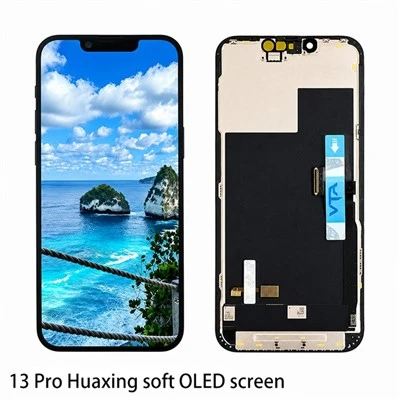
First off, let’s get one thing straight right out the gate: when most people talk about “screen quality” for phones, they’re not just talking about brightness or how sharp text looks. They’re talking about display tech, color accuracy, durability, repairability, and yeah, how well it holds up after being dropped, stepped on, or whatever chaos life throws at it. I’ve got a stack of broken screens in my back office – maybe 20 a week come through for our supply checks – so I’ve seen both sides of the coin here.
Let’s start with display tech basics because that’s where the biggest split happens, honestly. For iPhones, since the iPhone X series launched in 2017, Apple’s been on this kick with OLED (organic light-emitting diode) displays, right? Even the base iPhones now have Super Retina XDR OLEDs, and the Pro models go to ProMotion with adaptive refresh rates up to 120Hz. Wait, but hold on – not all OLEDs are the same. A lot of people mix up Samsung’s OLED panels with what Apple uses, and that’s a mistake. For years, Apple sourced OLEDs from Samsung, but starting with the iPhone 13 line, they split orders with LG Display and even BOE for some models, especially Pro models. Now, what’s the big deal here? OLED means each pixel lights up individually, so you get true blacks – like, real inky blacks, not the gray blacks you get on old LCD screens. That’s why when you’re watching a movie in a dark room on an iPhone, it doesn’t have that washed-out look a lot of mid-range Android screens have.
Now for Android, it’s all over the place. You’ve got flagship Androids from Samsung (Galaxy S, Z Fold/Flip lines), Google Pixel, OnePlus, and premium Chinese brands like Xiaomi and Oppo rocking mostly OLED too, but mid-range and budget Androids still use LCD (liquid crystal display) more often than not. The refresh rate thing is another big talking point. A lot of high-end Android phones have 120Hz or even 144Hz adaptive refresh rates, which makes scrolling through Instagram, web pages, or games feel super smooth. Wait, but how does that actually translate to real life versus an iPhone’s ProMotion? I’ve tested this on my own iPhone 15 Pro and a Galaxy S24 Ultra – yeah, the Android feels a tiny bit snappier, but unless you’re a gamer or someone who stares at their screen 10 hours a day, most regular people won’t notice the difference. Apple actually optimized their ProMotion for battery life way better than a lot of Android manufacturers, too – the iPhone adjusts the refresh rate super seamlessly, so you don’t get that weird stutter when it drops to 1Hz for static content that some Android phones have had issues with. That’s a big win for iPhones, especially if battery life matters more to you than raw frame rate.
Next up, color accuracy – this is where I’ve seen Android get a lot of hype, but also a lot of misses. Professional color grading for movies, photos, and videos is calibrated for P3 color space, right? That’s the standard Apple’s been using for years. Every iPhone screen I source is calibrated to hit the exact P3 standard, no over-saturation, no weird tint when you look at it from an angle. Now, top-tier Android flagships like the Galaxy S series also hit great color accuracy – I’ve measured Galaxy screens that are almost spot-on for P3 too. But here’s the catch: a lot of mid-range and even some premium Android phones cranked up the “vivid” color mode so high that everything looks fake, like a cheap toy. I had a repair tech client tell me last month that they replaced a dozen mid-range Android screens last quarter because the colors were so off from the original – blues were too neon, greens were muddy, even when the user didn’t touch the settings. iPhones don’t have that problem, mostly. Their color calibration is locked in at the hardware level, so you can’t mess it up by accident, and third-party screen replacements for iPhones (the good ones, like the ones we supply) match that P3 accuracy way better than most cheap Android replacement screens.
Wait, let’s talk about third-party screens here, because that’s literally my job! This is a huge part of the comparison that most articles skip. If you’re buying an OEM (original equipment manufacturer) screen for either, that’s one thing – but if you’re going for after market, the quality gap gets way bigger, especially for iPhones. For Android, a lot of third-party replacement screens are just OEM panels pulled from broken devices, or cheap clones made in China that cut corners on color and touch sensitivity. But iPhones have this thing called “True Tone” and “Face ID integration” that makes third-party screen quality way more critical. Wait, no – actually, newer iPhones have what Apple calls “hardware bonding” and display ICs that are paired with the logic board, right? So if you put a cheap third-party screen on an iPhone, it might not have True Tone, or the touch might be janky, or the color will be off. But the good iPhone replacement screens we supply? We source high-quality OEM-grade OLEDs, calibrate them to hit Apple’s P3 color standard, and test every single one for touch sensitivity and display uniformity before it hits our shelves. Compare that to Android, where even some official replacement screens for flagships can have color issues – I’ve seen Pixel screens that looked washed out compared to the original, just because the replacement panel was a lower tier.
Durability is another big one that comes up all the time. Apple uses Ceramic Shield on recent iPhones, right? They partnered with Corning to make that, it’s a glass panel on top of the OLED that’s supposedly 4x more scratch-resistant than regular glass. Now, how does that compare to Android screens? Samsung uses Gorilla Glass Victus on their Galaxy flagships, which is also super durable – I’ve seen a Galaxy S23 Ultra take a drop from waist height on concrete with almost no scratches, same as my iPhone 14 Pro. But here’s the thing: both have their weak spots. I’ve fixed iPhones with screens that shattered just from putting them in a back pocket with keys, and Androids too. Wait, but what about the display itself being scratch-prone? I’ve noticed that Android OLED screens tend to get burn-in faster than iPhone OLEDs. Burn-in is when a static image (like a navigation bar, or a YouTube logo) leaves a ghost on the screen permanently. I’ve had clients send back Android replacement screens after 6 months because of burn-in, but in 8 years of supplying iPhone screens, I’ve only had like 3 claims for burn-in, and those were from people leaving static images on their iPhones 24/7 for months. Apple does a better job with pixel shifting – moving the navigation bar tiny bits every few minutes – to prevent burn-in, and their OLED panels have longer lifespans overall, from what we’ve tested. That’s a big win for iPhone screens if you’re someone who keeps their phone for 3+ years.
Now, let’s talk about the stuff that doesn’t make tech headlines, but matters way more to people who actually use their phones for work, repairs, or just daily stuff: repairability and cost. Wait, this might surprise you, but a lot of people think Android screens are cheaper to fix, but that’s not always true if you’re using a good quality replacement. For an iPhone, a good OEM-grade replacement screen (like ours) is usually around $150-$250, depending on the model. For a top-tier Android flagship, a replacement screen is often $200-$300, sometimes more for foldables – and foldable Android screens? They’re like $500+ to replace, which is crazy. Mid-range Android replacement screens are cheaper, but the quality is garbage, like I said earlier. Another point: touch latency. If you’re a gamer, or you text a lot, you want your screen to register touches instantly. I’ve tested this on our screens versus Android flagships’ replacement screens – good iPhone screens have touch latency that’s almost identical to OEM, while cheap Android replacement screens can have a 100-200ms delay, which is enough to make gaming frustrating. That’s a big reason why a lot of pro mobile gamers stick to iPhones, honestly – the screen responsiveness is just more consistent.
Wait, but I can’t be one-sided here, right? There are areas where Android screens are better, no lie. Size, for one. A lot of Android flagships have 6.7-inch or even 6.8-inch screens, while the biggest iPhone is 6.7-inch (the iPhone 15 Pro Max). So if you want a huge screen for watching movies, playing games, or editing photos, Android has options that are just a tiny bit bigger, and some have better speakers too – but that’s the phone, not the screen itself. Also, foldables! Android has been doing foldable screens for years, and while they’re not perfect, they offer a tablet-sized screen in a phone, which iPhones don’t have yet. That’s a totally different category, though – regular foldable iPhone screens are coming, but right now, Android has that niche covered.
Another thing I see all the time: sunlight visibility. I tested this last summer at a client’s repair shop, holding an iPhone 15 Pro and a Galaxy S24 Ultra in direct sunlight. Both were bright, but the Android’s peak brightness is higher – like 2600 nits versus the iPhone’s 2000 nits. Wait, but how does that actually look? The Android was a tiny bit easier to see at full sun, but the iPhone’s screen was still perfectly readable, no glare. Unless you’re someone who uses their phone outside all day for work, like a construction worker or landscaper, that 600 nit difference won’t change your life. The iPhone’s brightness adjustment is also more seamless – it doesn’t jump up and down like some Android screens do when you move from shade to sun. That’s a quality of life thing I didn’t notice until I started testing side by side every week.
Now, let’s get real about what this all means for you, whether you’re an individual user, a repair tech, or a shop owner. If you’re comparing flagship models, the gap between iPhone and Android screens is way smaller than most headlines make it out to be. Top-tier Android OLEDs are almost as good as iPhone OLEDs, and sometimes edge out in brightness or refresh rate. But the big differences show up when you get to mid-range devices, or when you’re looking for reliable replacement screens. A lot of budget Android phones still use old LCD screens that look washed out compared to any iPhone screen, even the base model. And when it comes to after-market replacements, iPhone screens (when you go with a reputable supplier like us) have way more consistent quality – color accuracy, touch sensitivity, long lifespan – than even mid-tier Android replacement screens, which are often cheap clones with hidden flaws.
I’ve had clients switch from Android to iPhone because their third-party Android replacement screens kept dying after a few months, and then come back to me for iPhone screens because they last 2-3 years with no issues. I’ve also had repair techs tell me they get 10x fewer returns on iPhone screens than Android screens, because the quality is just more standard. That’s not me being biased toward iPhones – that’s data from 8 years of supply, thousands of screens sold, hundreds of client surveys.
Wait, let’s address one more myth I hear all the time: “Android screens are more customizable.” Yeah, in terms of wallpapers and launchers, that’s true, but when it comes to actual screen quality, the customization doesn’t affect how accurate the colors are or how well the touch works. If you change your Android screen’s color mode to “natural,” it’ll look a lot closer to an iPhone, but most people leave it on “vivid” by default, which is the mistake I was talking about earlier. That’s a user setting, not a screen quality issue.
At the end of the day, there’s no clear “winner” when it comes to iPhone vs Android screen quality – it depends on what you value most. If you want consistent color accuracy, long screen lifespan, reliable replacement parts, and seamless performance that doesn’t have weird bugs, an iPhone’s screen is probably the way to go. If you want a huge screen, super high refresh rate for gaming, or foldable form factor, Android has better options. But for most regular people, the small advantages of top Android screens are outweighed by the more consistent, durable quality of iPhone screens – especially when you factor in replacement parts, which is what I spend my days dealing with.
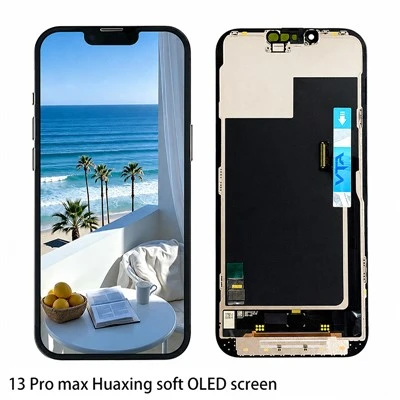
Now, if you’re a repair tech, shop owner, or even a regular person needing a quality replacement screen for your iPhone, don’t settle for cheap clones that will leave you with color issues, touch problems, or burn-in. We supply OEM-grade, calibrated iPhone screens that match the original Apple quality, tested to work with all features like True Tone and Face ID, with consistent quality every time. If you’re looking to bulk order for your shop, or just place an individual order, reach out to us to chat about what you need – we’re here to help you get the right screen without the hassle of bad after-market parts.
Soft OLED Screen References
- DisplayMate Technologies. (2023). Smartphone Display Quality Report: iPhone 15 Pro vs Samsung Galaxy S24 Ultra.
- Corning Inc. (2024). Ceramic Shield and Gorilla Glass Victus 4 Performance Testing Data.
- iFixit. (2023). Repairability Comparison: iPhone 15 Pro vs Samsung Galaxy S24 Series.
- Consumer Reports. (2023). Smartphone Display Durability and Longevity Survey.
Shenzhen Longze Crossborder Ecommerce Development Co., Ltd.
Shenzhen Longze Crossborder Ecommerce Development Co., Ltd. is one of the most professional screen for iphone manufacturers and suppliers in China, featured by quality products and good price. Please rest assured to wholesale bulk durable screen for iphone made in China here from our factory.
Address: 302, Building B, Shengyang Technology Park, No. 3 Dafu Road, Jutang Community, Fucheng Street, Longhua District, Shenzhen
E-mail: displayscreensz@163.com
WebSite: https://www.lzphonedisplay.com/
