If you run a mining operation, you know air quality in and around your site isn’t just a comfort factor—it’s a make-or-break detail for equipment longevity and safety. For my team, a cable supplier focused exclusively on mining cables, we see this play out every day: mines in regions with high airborne sulfur face unique cable failures that don’t pop up in milder environments. Last quarter, a gold mine in western Colorado reached out to us because their standard traction cables were corroding through in 18 months, when they should last 5 years. That issue traced straight to their high-sulfur air, and it’s not an isolated case. If you’re sourcing cables for a mine, smelter, or industrial site where sulfur levels are elevated, here’s what you actually need to get right for long-term, trouble-free installations. Mining Cables

First, let’s ground this in why high sulfur content in the air matters so much for cables. Most people know sulfur in air comes from two key sources for heavy industry: sulfur dioxide (SO₂) from fuel combustion (think diesel generators for haul trucks, or fossil-fuel boilers for on-site processing) and hydrogen sulfide (H₂S) from organic decomposition, ore processing, or even underground mine ventilation. Both are corrosive, but their mechanism is different. SO₂ reacts with moisture in the air to form sulfuric acid (H₂SO₄)—a weak acid that eats through metal over time. H₂S, meanwhile, reacts with non-ferrous metals like copper (the main conductor in almost all power and control cables) to form copper sulfide, a brittle, high-resistance compound that can cause arcing or total conductor failure. Standard cables, built for mild, low-sulfur environments, use generic jacketing and conductors that can’t stand up to this.
Let’s break down the non-negotiable requirements, starting with conductor material. If your cable runs on copper, you’re going to need a special grade. Standard electrolytic tough pitch (ETP) copper, the most common conductor used in mining cables, has trace impurities like oxygen, sulfur, and phosphorus that are practically catnip for airborne sulfur. Those impurities create tiny reaction sites where H₂S and SO₂ can attack, accelerating corrosion. Our team switched our core conductor to oxygen-free high-conductivity (OFHC) copper years ago for high-sulfur projects—it has less than 0.001% total impurities, so there’s no starting point for sulfur reactions. For even harsher sites, we also offer a tin-plated OFHC option: a thin coat of tin acts as a barrier between copper and sulfur, preventing direct contact. We tested this for a lead smelter in Arizona last year; their tin-plated traction cables showed 70% less conductor degradation after 2 years, compared to a competitor’s bare ETP cables that were down for repairs 3 times in that same window.
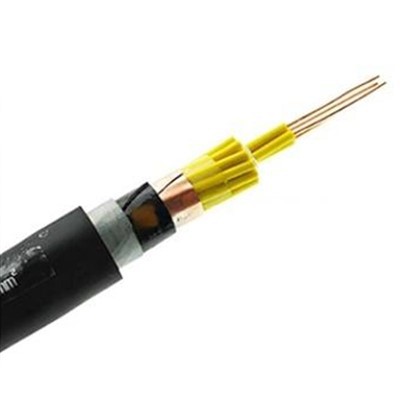
Next up is the jacketing and insulation—this is your primary line of defense against airborne sulfur. Most standard mining cables use PVC or EPR (ethylene propylene rubber) jacketing, but those materials break down quickly in high-sulfur environments. PVC absorbs moisture and reacts with sulfuric acid, leading to cracking within 2–3 years instead of the 5–7 years it should last. EPR, while more durable than PVC, still has open molecular structures that allow sulfur compounds to seep through over time. For high-sulfur installations, we require dual-layer jacketing with a sulfur-resistant outer layer and a moisture barrier. The outer layer we use is a specially formulated neoprene blend that’s been tested to resist both SO₂ and H₂S for up to 10 times longer than standard EPR. The inner layer is a cross-linked polyethylene (XLPE) barrier that blocks moisture and prevents any sulfur compounds from reaching the insulation or conductor. For control cables that run signal and power in sensitive equipment, we also add a conductive shield between the jacketing and insulation to catch any stray voltage caused by minor corrosion, reducing the risk of equipment damage from arcing.
Then there’s the installation environment itself—you can have the best cable in the world, but if you install it poorly, it will fail. High-sulfur areas often have harsh conditions: dust, extreme temperatures, and even standing water in cable trenches. First, you need to avoid laying cables in areas with direct exposure to sulfur fumes. In many mines, the highest sulfur levels are near processing plants or ventilation exhausts, so we advise routing cables along insulated overhead trays or in sealed conduit, rather than buried in trenches near emission points. If you have to run cables underground, use sealed, corrosion-resistant conduit made from HDPE or galvanized steel with a protective coating—standard uncoated galvanized steel will corrode and let sulfur seep in within 1–2 years. Also, make sure to leave enough slack in cable runs to account for temperature fluctuations; high sulfur environments often have extreme temperature swings, which can stress jacketing and cause cracks if cables are pulled too tight. We work closely with mine engineers to map cable routes before installation, to avoid the worst sulfur hotspots and ensure slack is calculated correctly for each site.
Another often-overlooked requirement is regular testing and maintenance tailored to high-sulfur environments. Even the best cable will degrade over time, so you can’t just install it and forget it. Standard maintenance checks for mining cables usually involve visual inspections for jacketing damage, but in high-sulfur areas, you need to test for internal conductor corrosion and resistance. We advise clients to do annual resistance tests on power cables, because increased resistance from copper sulfide buildup can lead to overheating and fire. For control cables, thermal imaging checks every 6 months can spot hotspots caused by arcing from corroded conductors. We also offer a corrosion monitoring service for clients: we install small test conductors near your cable runs that you can send to our lab to track sulfur corrosion rates, adjusting maintenance schedules if needed. Last year, a copper mine in Utah used this service and caught 2 corroded cable runs before they failed, avoiding over $100,000 in downtime for their ore processing line.
Wait, let’s address a common misconception: some mine operators think “more expensive” cable is automatically the right choice, but that’s not always true. We’ve seen clients overspend on exotic cables that aren’t built for their specific sulfur level, and underspend on basic upgrades that would solve their problem. For example, a small gold mine in Nevada tried a $1,200 per meter cable with a specialized fluoropolymer jacketing, thinking it would fix their corrosion issue, but their site had low-level H₂S, so the fluoropolymer was overkill. Our standard high-sulfur cable, with OFHC copper and neoprene jacketing, cost $650 per meter and lasted 3 times longer than the fluoropolymer option, saving them over $40,000 in replacement costs in 2 years. The key is to match your cable’s specs to your site’s sulfur concentration: if you have mostly SO₂ from diesel exhaust, a tin-plated conductor is enough; if you have high H₂S from ore processing, you need the dual-layer jacketing. That’s where our team comes in—we do a free site assessment to test your air’s sulfur levels, assess your installation environment, and recommend the exact cable you need, no extra costs for unnecessary features.
Safety is another angle that can’t be ignored. Cables that corrode in high-sulfur environments aren’t just a maintenance headache—they’re a safety hazard. Copper sulfide buildup on conductors increases the risk of short circuits, which can ignite flammable gases in underground mines, or cause arc flashes that hurt workers. Last year, a coal mine in West Virginia had a cable failure caused by unaddressed sulfur corrosion, which led to an arc flash that injured two workers. That’s why all our high-sulfur mining cables meet MSHA (Mine Safety and Health Administration) standards for flame resistance, even with the special jacketing. We also provide detailed installation guides tailored to MSHA rules, so you can ensure your setup is compliant and safe.
Let’s wrap this up with what this means for you as a mine operator or industrial manager. When you’re sourcing cables for a high-sulfur area, the three non-negotiables are: 1) use oxygen-free or tin-plated copper conductors to resist sulfur corrosion, 2) specify dual-layer sulfur-resistant jacketing and XLPE moisture barriers, 3) work with your installation team to route cables away from direct sulfur fumes and use sealed conduit where needed. And don’t cut corners on maintenance—annual resistance tests and thermal checks will save you from costly downtime.
If you’re dealing with recurring cable failures in a high-sulfur environment, or you’re planning a new installation and want to make sure you get it right, our team is here to help. We specialize exclusively in mining cables and have worked with dozens of sites across North America to solve sulfur-related corrosion issues, so we know the unique challenges of your industry. Reach out to our team to discuss your specific needs, and we’ll provide a tailored assessment and quote to keep your operations running smoothly, safely, and with fewer repairs.
Power Cables References
- National Electrical Manufacturers Association (NEMA). "Corrosion Resistance Requirements for Mining Cables in Industrial Environments." NEMA Standards Publication, 2021.
- Mine Safety and Health Administration (MSHA). "Guidelines for Electrical Cable Installation in High-Corrosion Mining Sites." MSHA Technical Report, 2022.
- International Association of Electrical Inspectors (IAEI). "Effect of Atmospheric Sulfur Compounds on Electrical Conductors and Jacketing." IAEI Journal, Vol. 58, No. 3, 2020.
Shenhua Electric Group (Anhui) Co., Ltd.
As one of the most experienced mining cables manufacturers in China, featured by quality products and low price. Please rest assured to wholesale customized mining cables made in China here from our factory. For quotation, contact us now.
Address: No. 10, Jingjiu Road, Economic Development Zone, Tianchang City, Anhui Province
E-mail: 421300254@qq.com
WebSite: https://www.cnshcable.com/
