If you’ve ever worked in precision manufacturing, chances are you’ve heard of double disc grinding machines—though if you’re like I was 10 years ago, you might have written them off as just another industrial tool on a factory floor. Back then, I was a new sales rep for a company specializing in these machines, and I thought they were overcomplicated: two grinding wheels spinning opposite directions, clamping parts between them, how hard could that be? Spoiler: very. But once I started walking factories with our lead engineer, I watched these machines turn rough, uneven blanks into parts so flat you could rest a credit card on their surface and it wouldn’t wobble an inch. Today, I work directly with shops to match them to the right double disc grinding setup, and I’m here to break down exactly how these workhorses operate, no jargon overload, just the real, hands-on stuff I’ve learned from decades on the floor. Double Disc Grinding Machines
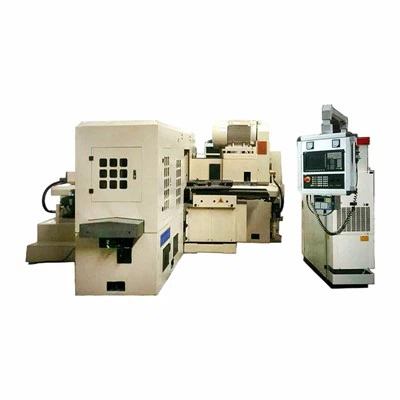
Let’s start with the basics: double disc grinding isn’t like surface grinding, where you slide a part across a single spinning wheel. It’s a two-sided process, meaning both flat surfaces of a part get ground at the same time—something that cuts production time in half for most precision components. The core setup is straightforward: two horizontally opposed abrasive grinding wheels, one above the work area and one below. But that’s where the simplicity ends. Between those two wheels sits a workholding system, usually a turret with multiple slots for parts (called “workpieces”) or a continuous rotary carrier, depending on whether you’re running small, high-volume pieces or larger, heavier ones. Here’s where the magic of precision comes in: the gap between the two wheels is calibrated to within thousandths of an inch, and the workpieces are held perfectly in that gap, so every surface gets a uniform grind.
Let’s walk through a step-by-step operation, using a common example: automotive piston pins, a part that needs near-perfect flatness and thickness tolerance (often ±0.0005 inches) to work in an engine. First, the operator loads the blanks into the machine’s work carrier—most often a steel plate with precision slots that hold each pin upright, so its two ends are aligned with the top and bottom grinding wheels. For high-volume runs, this carrier is rotary, spinning slowly between the two wheels as the machine runs; for smaller runs, a simpler indexing table works just fine. A lot of new operators skip this next step, but it’s critical: before running parts, the machine runs a “test grind” on a scrap blank to adjust the wheel gap. If the gap is even a thousandth of an inch off, the entire batch will be out of spec, so our engineers teach every client to double-check this before production.
Next, the grinding wheels kick into motion. These aren’t your average construction wheels—they’re precision-engineered with abrasive grains (usually aluminum oxide for steel parts, cubic boron nitride for harder materials like ceramics or titanium) bonded to a rigid core. The wheels spin in opposite directions: the top wheel spins clockwise, the bottom counterclockwise, so as the carrier moves, each workpiece is pulled through the gap smoothly, no jostling. This opposite spin is key: if both wheels spun the same direction, the part would bind or tilt, ruining the grind. The speed of the wheels matters too; for piston pins, we run them at around 1,800 RPM, but for softer aluminum parts, we slow it to 1,200 RPM to avoid burning the workpiece.
While the parts are being ground, there’s a whole cooling and flushing system working in the background that most people don’t notice. Grinding generates a lot of heat—if that heat builds up, it can warp the workpiece or dull the abrasive grains too fast. So the machine floods the gap with a water-based coolant, which cools the wheels and parts, and flushes away the metal chips (called “swarf”) that come off during grinding. If the swarf isn’t removed, it gets pressed into the workpiece’s surface, leaving scratches. Our machines have a built-in filtration system that catches even tiny swarf particles, so the coolant stays clean through long runs.
Once the parts have passed through the gap a set number of times (usually 2 to 5 passes, depending on how much material needs to be removed), the grinding stops, and the carrier indexes to a discharge position. The operator unloads the finished pins, which are now flat, smooth, and within the tight thickness specs required for engines. But wait—this isn’t the only way double disc grinding works, and it’s not just for small pins. We supply machines that handle everything from tiny medical implant parts (like spinal fusion plates) to large valve plates for heavy machinery, and each setup adjusts the workholding, wheel type, and speed to match.
One common question I get from first-time buyers: “Why use double disc grinding instead of two separate single-side grinds?” The answer boils down to accuracy and time. When you grind one side, then flip the part and grind the other, small human error or machine shift can create a slight taper or thickness variation between the two sides. Double disc grinding eliminates that because both sides are ground simultaneously, so the thickness is uniform across the entire part. For example, a hydraulic valve block needs both top and bottom surfaces perfectly parallel to seal against other components; a single-side grind would leave enough of a gap to cause leaks, but double disc grinding gets it right on the first pass.
Of course, no machine runs perfectly without maintenance, and that’s where a lot of shops go wrong. Grinding wheels wear down over time, so they need to be dressed (resharpened) regularly to keep their flatness. If a wheel becomes slightly warped, the entire grind will be off, leading to scrap parts. Our team offers on-site training for every client we work with, teaching them to inspect wheel flatness, adjust gaps, and replace worn abrasive discs without bringing in a third-party technician. We also stock replacement parts in our warehouse, so if a machine breaks down mid-run, we can get a technician to the shop within 48 hours for most North American locations.
I’ve seen double disc grinding machines save shops tens of thousands of dollars a year in scrap and labor costs. Take a mid-sized automotive shop I worked with two years ago—they were using single-side grinders for their piston pin runs, scrapping about 12% of parts due to thickness variation and spending 2 extra hours per run flipping and reloading parts. After we installed a mid-sized double disc machine, their scrap rate dropped to less than 1%, and their production time per run was cut by 50%. They now run two extra batches a week, all because of that one machine. It’s not just for big factories either—small machine shops making custom parts can benefit too; we have compact double disc models that fit in a 10×12 foot space, perfect for shops with limited floor space.
A lot of people ask me if these machines are automated, and the short answer is: they can be, but they don’t have to. Basic models work with manual loading for small runs, while automated versions have robotic arms that load and unload parts, making them ideal for high-volume production. The key is matching the machine to your actual production needs. If you’re a small shop making custom parts a few times a month, a manual machine will save you money. If you’re running 24/7 production of medical devices, an automated setup will cut down on labor costs and reduce human error.
One common myth I still hear: double disc grinding is only for flat parts. That’s not true either. While most workpieces are flat, some double disc machines can handle contoured parts with custom work carriers. For example, we supplied a machine to a turbine blade manufacturer that grinds the flat sides of blade roots, using a custom carrier that holds the blades at a slight angle to match the turbine’s design. It required a lot of custom engineering, but the end result was a part that fit perfectly, without any post-grind finishing work.
What sets our machines apart from others on the market? For one, we build the workholding systems to last—most competitors use cheap steel carriers that warp after a few thousand runs, but we use heat-treated alloy steel that stays flat for years. We also prioritize ease of use; our controls are programmed with common part settings (piston pins, valve plates, medical implants) so operators don’t have to adjust 10 different parameters on their first run. Most importantly, we don’t sell you a machine and disappear; our support team is available 24/7 for any questions, whether it’s adjusting a gap or troubleshooting a coolant issue.
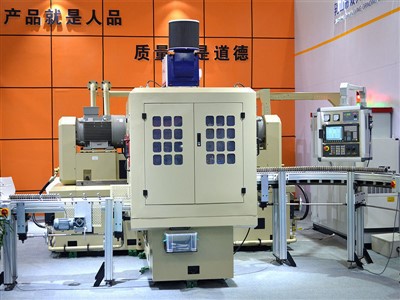
If you’re reading this and wondering if a double disc grinding machine is right for your shop, here’s what I’d suggest: look at your current production. Are you scrapping more than 5% of parts due to flatness or thickness issues? Are you spending extra time flipping parts for two-sided grinding? If either of those is true, a double disc setup will almost certainly save you money. But don’t just go for the cheapest machine—ask about support, customization, and training. A machine is only as good as the team that runs it, and we make sure our clients have all the tools they need to succeed.
Double Disc Grinding Machines At the end of the day, double disc grinding is all about precision, speed, and consistency. It’s the workhorse that keeps parts tight, engines running, and machines sealing. I’ve spent over a decade working with these machines, and I still get excited when I watch a rough blank come through the gap and emerge as a part that’s good enough for aerospace or medical use. If you’re in the market for a double disc grinding machine, or just have questions about how they can fit your production, I’d be happy to walk through your needs and find the right setup for you. Reach out to our team today to schedule a consultation—we’ll come to your shop, assess your current process, and show you exactly how a double disc machine can make your operation more efficient and profitable.
References
- “Modern Grinding Technology: Double Disc Grinding,” Society of Manufacturing Engineers, 2021.
- Precision Metal Finishing Handbook, 3rd Edition, Industrial Press, 2019.
- “Abrasive Wheel Selection for Precision Grinding,” Journal of Manufacturing Processes, Vol. 45, 2020, pp. 512–520.
- Double Disc Grinding Equipment Guide, National Tooling and Machining Association, 2022.
- Heat Treatment and Workholding for High-Volume Precision Manufacturing, ASME International, 2021.
Rushan Shuangxing Machine Tool Manufacturing Co., Ltd.
Rushan Shuangxing Machine Tool Manufacturing Co., Ltd. is one of the most reliable double disc grinding machines manufacturers and suppliers in China, featured by quality products and low price. Please rest assured to wholesale durable double disc grinding machines for sale here from our factory. Customized orders are welcome.
Address: No. 28, Chuangye 1st Road, Rushan, Weihai, Shandong Province, China.
E-mail: wxm@rssxjc.net
WebSite: https://www.ddgmachine.com/
