Hey guys, let’s cut to the chase—if you’re here looking for a special purpose forklift, you’re not just hauling pallets around a standard warehouse. You’re probably navigating tight nuclear facility corridors, lifting weirdly shaped prefab concrete panels for construction, or even moving sensitive pharmaceutical inventory that needs climate control. I’ve been selling these bad boys for over a decade, and let’s be real—most buyers either go too small (and get stuck mid-job) or blow their budget on a fancy feature they’ll never touch. Today, I’m breaking down how to pick the right one without wasting time, cash, or sanity. Special Purpose Forklift
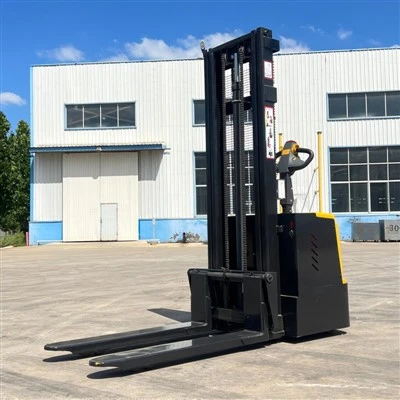
First off, let’s get one thing straight: special purpose forklifts aren’t your average rental-store jobbie. A standard lift can’t handle a 12,000 lb steel coil that rolls like a log (you need a coil ram attachment for that, duh) or fit through a 6-foot door inside a cleanroom. I’ve seen clients buy a rough-terrain lift for their indoor farm only to realize it leaves tire marks on fresh lettuce—oops. So the first question you need to answer before even browsing specs: What’s the exact, day-to-day stuff this forklift will do?
Let’s start with the big three: capacity, environment, and attachments. Wait, no—wait, capacity is non-negotiable, but not just the rated lift weight. A lot of brands list their “max capacity” straight up, but that’s usually at the closest lift height, not when you’re reaching 15 feet up in a high bay. Last year, a landscaping company bought a 5,000 lb rated rough-terrain lift to move landscape boulders—they got 4,800 lbs max when reaching 10 feet, so they had to rent a second one last minute. Don’t be that guy. Calculate your heaviest load, then add 10-15% to it. Why? Because things get bumpy, the ground might be soft, and you’ll probably overload it by accident at some point (we’ve all been there).
Next, the environment. This is where most people mess up. If you’re working outdoors on a construction site with mud and loose gravel, you need rough-terrain tires—solid rubber is for indoor smooth floors, and pneumatic will blow out on rocks. But if you’re in a food processing plant where crumbs and debris are everywhere, you need a forklift that’s easy to power wash—stainless steel frames, sealed electrical components, no crevices where food can get stuck. I once sold a lift to a meat packing plant that had regular forklifts, and they kept getting bacterial growth in the motor housing because they couldn’t clean it. The special purpose model we supplied? Power washable in 10 minutes flat, no issues since. And what about hazardous areas? Oil refineries, chemical plants—you need an explosion-proof forklift, not just a regular lift with a cover. These have spark-free motors, sealed fuel systems, and non-sparking metal parts. Cutting corners here is not just a bad business move—it’s dangerous.
Attachments. Oh man, attachments can make or break your forklift. You don’t need a whole new machine for every job—you just need the right attachment. For example, if you’re moving drums, a clamp attachment is way better than forks that can slip and let a 55-gallon drum go rolling. For pallets with odd dimensions, adjustable forks or a side shifter will save you so much time—no more repositioning the whole forklift just to line up the forks. Last month, a solar panel installer came to us needing to lift thin, fragile panels without scratching them. We hooked them up with a vacuum attachment, and they haven’t had a single damaged panel since. Pro tip: buy attachments from the same supplier as your forklift, or at least make sure they’re compatible. I’ve had clients buy a third-party attachment that didn’t fit, so they had to hack it with welding, which voided their warranty. Not cool.
Now, let’s talk about features that actually matter vs. fluff. Let’s be real, every lift has a Bluetooth radio these days, but do you need a backup camera? If you’re working in a tight space, yes—especially if you’re carrying a load that blocks your view. We had a hospital client who moved medical equipment through narrow hallways, and they swears by their backup camera. What about lift height? Again, don’t just go for the highest rating—measure your actual storage space. If your warehouse has 12-foot ceilings, a lift that goes to 18 feet is a waste of money. And for electric vs. gas? Electric is quieter and no emissions, perfect for indoor jobs, but they need charging time—so if you’re running three shifts, you need two forklifts or fast-charging batteries. Gas is better for outdoor, heavy-duty jobs where you don’t have access to power. But wait, don’t sleep on propane—it’s cleaner than gas and still has good runtime, that’s a middle ground a lot of people miss.
Warranty and service. This is something I yell about all the time, because it’s the part no one thinks about until their forklift breaks and they’re stuck without it. A cheap forklift with a 1-year warranty and no local service is worse than a slightly more expensive one with a 3-year warranty and a tech who can be at your site in 2 hours. Last year, a construction company bought a knock-off special purpose lift online, and when the hydraulic pump broke, they had to ship it back to China for repairs—took 6 weeks. They lost a whole job because of it. Do your homework on the supplier’s service network. Here’s a quick test: ask the supplier for three local clients, then call them and ask how fast repairs are. If they hesitate, run.
Budget. I get it, budgets are tight. But special purpose forklifts are not a place to pinch pennies. Let’s break it down: upfront cost vs. long-term cost. A $15k lift that breaks every 6 months costs you way more than a $20k lift that runs for 5 years. Also, think about total cost of ownership—fuel/electricity costs, maintenance, downtime, resale value. Our special purpose lifts hold their value way better than generic ones because they’re built for specific jobs, so if you decide to upgrade, you can sell it for a good price. I once had a small manufacturing owner who tried to save $5k on a used special lift, and it ended up costing him $20k in lost production when it died mid-batch. Don’t be that guy.
Wait, let’s throw in some niche examples to make this real. If you’re a vineyard moving grape bins between rows, you need a narrow-aisle, low-ground-clearance forklift that won’t crush vines. We sold one to a California vineyard last year, and they said it let them move twice as many bins without damaging crops. If you’re a snow removal crew for airports, you need a forklift that can attach a snow blower plow, handle heavy snow buckets, and work in sub-zero temperatures—batteries that die in cold weather are a nightmare, so you need cold-resistant batteries. And for those working in research labs moving sensitive samples, you need a static-discharge forklift—so static doesn’t fry $100k lab equipment. That’s a specialty most suppliers don’t even know exists, but we’ve got those.
Another thing: operator training. No matter how good your forklift is, if your driver doesn’t know how to use it, it’s useless. Good suppliers (like me, obvi) offer training for free or a small fee, because we don’t want you breaking our stuff. Make sure the forklift you pick has intuitive controls—if it’s super complex, your operator will take longer to learn and make more mistakes.
Wait, let’s wrap this up with a quick checklist you can save for later. 1. List your exact heaviest load and max lift height—add 10% to both. 2. Nail down the environment: indoor/outdoor, clean/hazardous, floor type. 3. Pick attachments first, then make sure the forklift fits them. 4. Skip the fluff features, focus on safety (backup camera, lights, etc.). 5. Check warranty and local service before you sign. 6. Compare total cost, not just upfront price.
At the end of the day, the right special purpose forklift isn’t the biggest or fanciest one—it’s the one that fits your specific job like a glove. I’ve helped hundreds of clients from all kinds of industries find theirs, and I can help you too. If you’ve got questions about your unique job, need specs, or want to talk through options, just reach out. No pushy sales pitches, no confusing jargon—just straight talk from someone who’s been in the game long enough to know what works and what doesn’t.
Oh, and one last reminder: don’t make the mistake I see so many new business owners make—waiting to buy a special lift until you’re stuck with a generic one that can’t do the job. It’s way easier to get the right one upfront than to fix a bad decision later. You’ve got this, and I’m here to help.
Diesel Forklift References:
- Occupational Safety and Health Administration (OSHA). Powered Industrial Truck (Forklift) Safety Standards. 2022.
- Material Handling Industry (MHI). Special Purpose Lift Truck Application Guide. 2023.
- National Agri-Marketing Association (NAMA). Agricultural Material Handling Equipment Best Practices. 2022.
- International Society of Pharmaceutical Engineers (ISPE). Facility Design and Equipment for Pharmaceutical Manufacturing. 2021.
- American National Standards Institute (ANSI). Safety Standards for Industrial Lift Trucks. B56.1-2020.
Qingdao Dawnshine Heavy Industry Co., Ltd.
As one of the most professional special purpose forklift manufacturers and suppliers in China, we have world-leading production equipment and strong manufacturing capabilities. Welcome to wholesale discount special purpose forklift in stock here and get quotation from our factory. For price consultation, contact us.
Address: South Side of Qiwang Road, Yueshan Village, Naoshan Economic Development Zone, Qingzhou City, Shandong Province, China
E-mail: laven.wang@china-dawnshine.com
WebSite: https://www.ds-forklift.com/
