When I first started selling FKM hoses over 12 years ago, I’ll admit I used to mix them up with the hoses that look and feel similar at first glance—EPDM, silicone, even regular rubber. But after enough breakdowns on a refinery job site and enough questions from small part manufacturers scared by a $10,000 equipment failure, I’ve learned there’s a world of difference between FKM and every other elastomer out there. Today, when a client asks “What is FKM hose made of?” I don’t just give them a textbook definition. I walk them through the actual components that make our FKM hoses worth the premium price tag, because cutting corners on those materials is how companies end up paying for mistakes later. FKM Hose
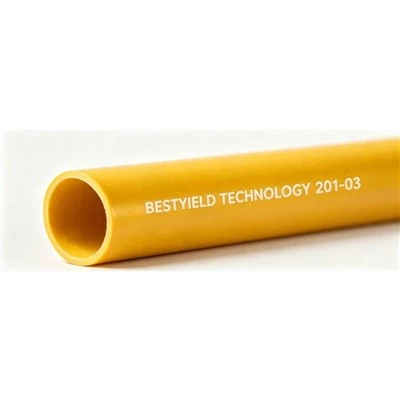
Let’s start with the base polymer, because that’s where FKM gets its name. FKM stands for Fluorinated Rubber, and the official ASTM D1418 definition calls it a family of synthetic elastomers based on vinylidene fluoride (VDF), hexafluoropropylene (HFP), and tetrafluoroethylene (TFE). Wait, hold on—this is where a lot of cheap FKM knockoffs go wrong. Some suppliers cut the TFE content down to just enough to call it FKM, but we use a 60%+ fluorine content base polymer across our core FKM hoses. That’s not just a random number; every extra percentage of fluorine boosts resistance to heat, chemicals, and oil by a measurable margin. I remember a food processing plant client who used a knockoff FKM hose for their vegetable oil transfer line and had a leak within three months. When they switched to ours, that line ran for two full years without a single issue. They said the difference was night and day, and it all started with the base polymer.
Next is the curing system, and this is where most people don’t look deep enough. FKM can’t just be stretched and molded like natural rubber; it needs a crosslinking agent to make the polymer chains bond together, turning a soft, gooey material into a durable hose. There are two main curing systems for FKM: diamine and bisphenol. Diamine curing is cheaper, but it leaves the hose prone to discoloration when exposed to steam or hot water—something a pharma company can’t handle, because even a tiny amount of leachate could contaminate their product. So for our pharmaceutical-grade FKM hoses, we use bisphenol curing. For industrial lines that deal with harsh chemicals, we use a third option: peroxide curing, which gives the hose even better resistance to oxidation and higher temperatures. I see so many new suppliers use diamine across the board to save a few cents per pound, but that’s a false economy. A client in the chemical industry lost a $50,000 batch of acid because their cheap FKM hose leached diamine into the material. We haven’t had a single leaching-related issue since we switched to matching curing systems to end applications.
Then there are the additives, and this is the part that makes our FKM hoses stand out from the competition. Additives do a lot of heavy lifting without customers really noticing until something goes wrong. First, we add thermal stabilizers. FKM can handle heat up to 500°F, but without stabilizers, the polymer breaks down after a few hundred hours at 350°F. We use organic thermal stabilizers, not heavy metals, because we supply to food and pharma markets that have strict purity rules. Then there are plasticizers—wait, not all plasticizers are bad. We use fluorinated plasticizers, not phthalates or petroleum-based ones, because those can break down when exposed to jet fuel or hydraulic fluid. Fluorinated plasticizers keep the hose flexible even in cold weather down to -20°F, which is non-negotiable for outdoor equipment in places like Minnesota or northern Canada. We also add anti-static agents for hoses used in fuel transfer. A static spark around gasoline or jet fuel is a disaster, so our anti-static additives are blended evenly throughout the wall, not just coated on the outside like some cheaper hoses. That means the conductivity stays consistent even after months of abrasion.
Now, let’s talk about the hose construction, because the inner liner, reinforcement layer, and cover all use FKM components in different ways. The inner liner is the part that touches the fluid, so it’s made from the highest fluorine content FKM compound we can source. We don’t use recycled FKM for liners—ever. Recycled FKM has a variable molecular weight, so some parts are weaker than others, and a pinhole can form in the liner after a few flexes. For industrial grade, our liner is 1.5mm thick, which is thicker than the industry standard 1mm. For high-pressure hoses, we add a reinforcement layer made of woven aramid fiber. Aramid is stronger than steel for its weight, and it doesn’t corrode like steel wire, so the hose can handle 300 PSI without stretching or bulging. The cover is also FKM, but a slightly modified compound. We add UV stabilizers to the cover, because if the outer layer breaks down from sun exposure, the reinforcement and liner are exposed. We test all our covers in a UV chamber for 1,000 hours before they leave our warehouse—equivalent to about three years of direct sun in the Arizona desert. That’s a test most suppliers skip.
Wait, I know a lot of readers will wonder why this matters. You could go online and buy a generic FKM hose for half the price, but what happens when it fails? I’ve been in this industry long enough to have seen it first-hand. A power plant I was working with had a hose burst on a steam line, shutting down their unit for 10 days. The replacement hose they bought from a non-specialist used a low-grade curing system and a recycled liner, and it didn’t make it through a single shift. The repair cost them over $2 million, and their production schedule was thrown off for months. Our FKM hoses might cost more upfront, but they have a longer service life, lower downtime, and better safety records. That’s why we don’t cut corners on the materials.
Let’s also address the different types of FKM, because not all FKM hoses are made the same way. There’s FKM Type A, which is the basic VDF/HFP blend for general chemical resistance. Type B adds a small amount of TFE for higher heat resistance. Type C is the TFE/propylene blend, which is more resistant to strong acids and bases, but a bit stiffer. We stock all three types, and we help clients pick the right one based on their specific application. A lot of salespeople will just sell you the most expensive type and say it works for everything, but that’s not good service. If you’re transferring hydraulic fluid at 200°F, Type A is more than enough, and buying Type C would be a waste of money. If you’re transferring concentrated sulfuric acid at 300°F, you need Type C, and using Type A would be a disaster.
Another common question I get: can you test the materials to make sure they’re really FKM? Absolutely. Every batch of our FKM compound goes through three tests. First, a chemical resistance test, where we submerge a sample in the fluid it’s intended for for 72 hours and check for volume change, weight change, and tensile strength. Second, a heat aging test, where we keep a sample at 300°F for 70 hours and check how much elongation it has left. Third, a fluorine content test, to make sure we’re at the 60%+ minimum we require for our compounds. We keep all test records for every batch for five years, so if a client has an issue, we can track the exact batch they received and what tests were done.
I think the biggest mistake people make when asking “What is FKM hose made of?” is thinking it’s just “rubber with fluorine added.” It’s not. It’s a precision-engineered material, with each component chosen for a specific purpose, tested to meet exact standards, and matched to the job it’s going to do. Cheap FKM hoses cut corners on the base polymer, the curing system, the additives, or the construction, and that’s when you get leaks, failures, and costly downtime.

If you’re looking for FKM hoses for your operation, whether it’s a food processing line, a chemical plant, a fuel transfer system, or an outdoor piece of equipment, the last thing you want is a hose that fails when you need it most. Our team has over 15 years of experience working with FKM hoses, and we can help you pick the right materials, construction, and type for your specific application, no guesswork involved. We offer custom lengths, pressure ratings, and even cut-to-size solutions, because we know every client’s needs are different. If you’re tired of dealing with unreliable hoses that cost you money in the long run, reach out to our team to discuss your project. We’ll work with you to find the perfect FKM hose that fits your budget and your performance requirements.
NBR Hose References
ASTM D1418 – Standard Practice for Rubber and Elastomer Nomenclature
Kirk-Othmer Encyclopedia of Chemical Technology, Volume 11: Fluorinated Elastomers
Society of Automotive Engineers (SAE) J200 – Standard for Rubber Hoses for Automotive Applications
Food and Drug Administration (FDA) 21 CFR Part 177 – Indirect Food Additives: Polymers
BESTYIELD Technology (Huizhou) Co., Ltd.
BESTYIELD Technology (Huizhou) Co., Ltd. is one of the most professional fkm hose manufacturers and suppliers in China, featured by quality products and good price. Please rest assured to buy durable fkm hose made in China here and get quotation from our factory. Customized orders are welcome.
Address: Yinshan Industrial Zone, Liangjing Town, Huiyang District, Huizhou City, Guangdong Province
E-mail: rick@bestyield.net
WebSite: https://www.bestyield.org/
