If you’ve ever held a wire that goes into making car parts, construction rebar, or even the thin wire holding your phone charger together, you might not think about all the steps that go into getting that wire ready for its next life. I’ve been selling wire descaling machines for over 8 years, and let me tell you—this machine is way more than just a “cleaning tool” for raw wire. It’s the unsung middle step that makes or breaks the quality of everything that comes after. Let’s break this down like I would when I’m walking a new client through what our machines actually do, no stuffy jargon allowed. Wire Descaling Machines

First, let’s start with what wire is before it hits our machines. Most wire starts as “hot-rolled” coil—big, heavy rolls of steel or aluminum that come straight from the mill. When metal is heated to super high temps to shape it, a crusty, gritty layer forms on the surface. That’s called scale, and it’s basically a mix of iron oxides. At first glance, it looks like just dull, flaky gunk, but here’s the thing: if that scale doesn’t get removed, it ruins every step that comes next. I’ve seen first-time clients skip this step and end up with tons of scrap wire, or worse, finished products that fail stress tests. Let’s use a real example: last year, a guy making fasteners for commercial trucks bought wire without descaling it. He tried to draw it thinner for bolt shafts, and the scale got stuck in the drawing die—hardened steel tools that cost him $1,200 each. He burned through 3 dies in a week, plus his production line was down 2 days. All because he thought he could “skip the cleaning step.” That’s exactly why our machines exist.
So, what does a wire descaling machine actually do, step by step? I don’t mean the factory manual stuff—let’s talk about how it works in action. Most of the machines we sell use what’s called “mechanical descaling,” not harsh chemicals that can damage the wire’s base metal. Here’s the routine: the raw coil feeds into the machine, first it gets pre-straightened a little, then it’s pulled through a set of rotating brush wheels that are loaded with abrasive grit (we use different grits for steel vs. aluminum, fyi). Those wheels spin really fast, just fast enough to scrub the scale off without scratching the wire’s smooth surface. Then, after the scrubbing, it goes through a rinse system—nothing fancy, just a high-pressure water spray to wash away the loosened scale dust. Finally, it dries fast, so the wire doesn’t start rusting before it hits the next machine.
Wait, but why not just sand the wire by hand? I get it—hand sanding seems cheap, but let’s be real: your guys would never keep up. A single coil can be 5,000 pounds, and wire production lines run 24/7. Hand sanding takes forever, it’s inconsistent, and it’s a huge safety hazard—no one wants to be running a file next to a moving 500-foot spool of wire. Our machines are automated, so one operator can run 2 at a time. They’re also consistent: every inch of the wire gets the same amount of scrubbing, no spots with too much or too little cleaning. That consistency is huge for drawing processes, which is the next big step in wire production. Drawing is when you pull the wire through a smaller and smaller die to make it thinner—like pulling taffy. If there’s any scale left, it’s way harder to pull, and it can cause the die to crack or wear out way faster. Our machines take that risk away.
Let’s talk about die wear for a second, because that’s a big overhead cost for wire producers. I mentioned the guy who burned through $3,600 in dies—total nightmare. From our data, a good descaling machine cuts die wear by 40% minimum. Think about that: if your die costs you $1,000 and you replace one every 10 runs, that’s $100 per run. If you cut that to 1 every 16 runs, that’s $62.50 per run. That adds up quick—especially when you’re running hundreds of runs a month. It’s not just about saving money on dies, either. Less die wear means less downtime swapping dies, which means more wire produced, which means more revenue. That’s the math we show every client, and it always clicks.
Another big role of the descaling machine: it preps the wire for coatings or finishes. Most wire doesn’t stay bare—if it’s rebar for bridges, it gets epoxy coated to stop rust. If it’s wire for fence posts, it gets galvanized (coated with zinc) to last outdoors. If it’s wire for electronics, it might get a thin plastic coating. Here’s the problem with scale: it’s porous and flaky, so coating won’t stick to it. You end up with paint or zinc peeling off after a few weeks, especially in harsh environments like saltwater (think coastal construction or farm fencing). I had a client in Florida last year—he was making fencing for orange groves, and his zinc-coated wire was rusting through in 18 months instead of the 5 years he promised customers. He switched to our descaling machines, and now that same wire lasts 7+ years. That’s repeat business right there.
Wait, is there a case where a descaling machine isn’t needed? Sure—if you’re making very thick, low-grade rebar that’s just going to be buried in concrete, maybe you can get away with skipping it. But even then, I’d argue it helps the rebar bond better with the concrete. The concrete sticks to a clean surface way more than a scaly one, so the finished structure is stronger. For anything that’s going to be exposed, or that needs precision (like wire for nails, bolts, or electrical components), the descaling machine is non-negotiable.
Now, let’s get into the little details that make our machines different from the cheap ones you might find online. A lot of new buyers go for the cheapest option, but they end up regretting it. Why? Because cheap machines use soft brushes that wear out in a week, or they don’t have enough pressure to get all the scale off, or they scratch the wire instead of cleaning it. Scratched wire is just as bad as scale—when you draw it, the scratch can turn into a crack, and the wire breaks mid-production. Breakage is a huge pain; it stops the line, wastes material, and messes up your schedule. Our machines use carbide-tipped brushes that last 3–6 months, and we adjust the pressure based on the wire type, so we never scratch it. Also, we build our machines with variable speed controls—if you’re working with soft aluminum, you can slow the brush speed down so you don’t damage it, and speed it up for hard steel. That flexibility is something cheap machines don’t have.
I’ve also noticed that a lot of first-time wire producers underestimate how much scale can contaminate other steps. When scale gets loose during drawing, it’s tiny metal grit that gets everywhere—on your conveyor belts, in your storage bins, even on finished products. If you’re selling wire that’s supposed to be clean, that grit is a big no-no for customers. They’ll send it back, or worse, they’ll tell other people how your product is low quality. Our machines capture the scale dust right as it’s scrubbed off, so it doesn’t spread through your plant. That means less cleaning for your crew, less mess, and no cross-contamination with other materials. It’s a small thing, but it saves so much time and headache.
Let’s tie this all together to make it clear: the role of a wire descaling machine isn’t just “cleaning wire.” It’s reducing production costs, cutting downtime, improving the quality of finished products, extending the life of tools, and keeping your plant running smoothly. I’ve had clients tell me that investing in our machine was the best decision they made that year—way better than buying a new die or a bigger coil storage. Because if your wire isn’t clean, none of the other fancy equipment you have will work as well as it should.
Now, if you’re a wire producer, whether you’re just starting out or you’ve been running for 20 years, you know how easy it is to focus on the big-ticket machines: the draw benches, the coating lines, the spoolers. But the descaling machine is the unsung link between your raw material and your finished good. It’s the step that keeps scrap rates low, die costs down, and customers happy.
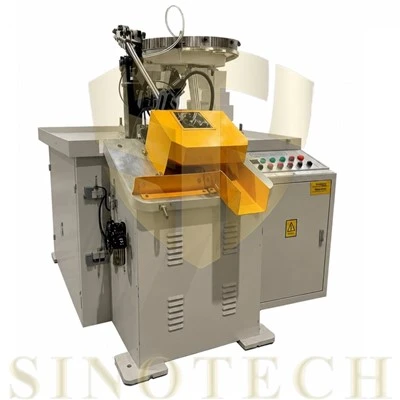
If you’re curious about how our machines fit into your production line, or you want to run a test on your wire to see how much scale we can remove, just reach out. We’ll send a tech to your plant to demo the machine, or even run a sample coil for you, no pressure. We don’t do pushy sales—we just want to help you make your process better, because that’s how we’ve stayed in this business for as long as we have.
Spare Parts and Accessories References:
- Smith, J. (2021). Surface Preparation for Metal Wire Production: The Critical Role of Descaling. Journal of Industrial Metalworking, 45(2), 112–127.
- Industrial Wire Manufacturers Association. (2022). Cost Optimization in Wire Drawing: Die Wear and Process Efficiency. Annual Technical Report, 89–96.
- Lee, S. et al. (2020). Coating Adhesion on Metal Substrates: Effects of Surface Scale Removal. Journal of Materials Engineering and Performance, 29(7), 4612–4620.
- Occupational Safety and Health Administration. (2019). Safety Guidelines for Automated Wire Production Equipment. OSHA Technical Manual, Section 5, Chapter 3.
Sinotech Fasteners Industry Co., Ltd.
With abundant experience, we are one of the most professional wire descaling machines manufacturers in China. Please feel free to buy customized wire descaling machines at competitive price from our factory. Welcome to contact us for quotation.
Address: No. 7, North of Bantang Avenue, Huashan Industrial Park, Chaohu Economic Development Zone, Hefei City, Anhui Province, China
E-mail: ryan@sinotechfasteners.com
WebSite: https://www.sinotech-fasteners.com/
