If you’re running a small to mid-sized electrical component shop or a contract manufacturing business, chances are you’ve stared at a stack of custom busbar orders at 2 a.m., wondering how to keep up. Small batch production—think runs of 10 to 50 assemblies, with frequent design tweaks, tight deadlines, and minimal capital to burn—comes with its own set of pain points. As a busbar assembly machine supplier who’s spent the last 12 years on the factory floor and in customer workshops, I’ve seen too many small business owners drop tens of thousands on a “top-of-the-line” machine only to realize it’s overkill for their needs, or worse, can’t handle the unique quirks of their small-batch orders. This post is the playbook I wish I’d had when I started out, to help you pick a machine that fits your production style, not the other way around. Busbar Assembly Machine
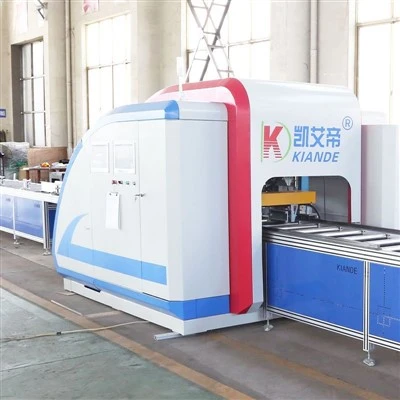
Let’s start with the biggest mistake I see small batch makers make: chasing “versatility” that doesn’t actually matter. When I first launched my supply business, a fellow shop owner drove four hours to buy our flagship heavy-duty press, convinced it could do everything—until he got home and realized its 20-minute setup time per die meant his 15-unit batch of 3mm copper busbars took almost half a day to prep, costing him more in downtime than he saved on machine cost. For small batches, setup speed and die flexibility are way more critical than max tonnage or speed alone. That’s not to say you should skimp on power; if you’re working with thicker busbars or cladding copper-aluminum stacks, you need enough force to get a clean, gap-free connection. But for most small batch jobs—whether you’re assembling busbars for solar inverters, low-voltage switchgear, or EV auxiliary systems—tonnage in the 10 to 30 ton range is more than enough. The magic is in how easy the dies swap, and if the machine can hold multiple dies without needing a full recalibration every time.
Next, consider material handling specifically tailored to small runs, not large volume. Big, fully automated busbar machines are built for 1,000-unit runs, with integrated coil feeders and robotic arms that move raw material straight from stock to finished part. For small batches, that’s like bringing a semi-truck to a neighborhood bakery: it’s overcomplicated and impossible to adapt when your next batch is a different material, size, or shape. Look for a machine that works with both pre-cut busbar blanks and coils, so you can jump between a 5-unit order of ¼” aluminum and a 25-unit order of ⅜” copper without reconfiguring your entire line. I recently worked with a startup that assembles custom busbars for off-grid solar kits; they picked a semi-automatic machine that lets them load blanks manually for short runs and hook up a compact coil feeder when they need to knock out a few dozen parts, and that flexibility cut their production time by 40% in the first month.
Die customization is another non-negotiable for small batch work. Most machine manufacturers stock standard dies for straight cuts, simple bends, and basic lamination, but if you need a custom notch for a sensor tab or a specific hole pattern that doesn’t exist off the shelf, you’ll want a machine that lets you swap or modify dies without breaking the bank. I’ve had customers come to me with orders requiring 12 unique die configurations for a single small batch, and only machines that support quick, tool-less die adjustments make that possible. Avoid machines that lock dies into a proprietary system; if you can only buy replacement or custom dies from one manufacturer, you’ll end up paying a 200% markup and waiting weeks for a new die when you need it fast. Look for models that use industry-standard die plates, so your local machine shop can machine custom dies for you in a day or two, no special orders required.
Then there’s operator accessibility, which gets overlooked by a lot of big machine-focused brands. Small batch production means you’re probably not running a dedicated 3-person machine team—your operator might also be handling quality checks, customer communications, and parts runs. A machine with a 10-inch touchscreen that requires 15 steps just to adjust a bend angle is going to kill productivity; pick one with a simple, intuitive interface that lets an operator with basic mechanical training change settings in 2 clicks. Also, think about workspace: if your shop is tight on floor space, a compact desktop or bench-top machine is better than a 5-foot-tall floor model that takes up half your assembly area. I have a customer who works out of a 1,200-square-foot shop that makes custom busbars for commercial HVAC systems; their bench-top machine fits right on their main workbench, so they don’t have to walk 20 feet every time they need to adjust a setting, cutting down on wasted motion all day.
Quality control integration is another key factor that’s easy to miss when you’re focused on speed. For small batches, you can’t afford to scrap an entire order because one bend was off by a millimeter, or a crimp had a gap that would cause a failure down the line. Look for machines that have in-line or optional add-on quality checks—like bend angle sensors, crimp force monitors, or even a small camera that verifies hole alignment before the part is finished. A friend of mine runs a small electrical contract shop and swore by “good enough” machines for years, until a batch of 20 busbars for a local control panel failed a tension test because their crimp pressure was inconsistent. Switching to a machine with built-in force monitoring meant they caught that issue on the first part, not the 20th, saving them from rework and a bad customer review. For small batches, quality isn’t an afterthought—it’s how you keep your customers coming back for repeat business, so your machine should support that.
Cost, obviously, is a big one, but it’s not just the upfront price. You need to factor in long-term operating costs, too. A cheaper machine might save you money at first, but if it uses more electricity, wears out dies faster, or requires monthly repairs that cost as much as a more expensive machine’s maintenance plan, it’s not a good deal. I’ve seen machines sell for $8,000 that cost $3,000 a year in replacement parts and repairs, while a $12,000 machine with better build quality only needed $500 a year in maintenance. Also, consider support: when your machine breaks at 8 a.m. on a Monday, you can’t wait a week for a technician to fly in. Look for suppliers that offer local service or remote troubleshooting, and include a 12-month parts and labor warranty as standard. Avoid brands that only sell machines online with no on-the-ground support—for small batch shops, downtime is a direct hit to your revenue, so reliable support is worth every extra dollar.
Let’s talk about specific use cases to make this concrete. If you’re making very small, simple busbars for consumer electronics—think 10-unit batches of 1mm thick copper for battery packs—you don’t need a heavy press. A compact bench-top semi-automatic machine with tool-less die swaps will handle that job perfectly, and it’s easy to move if you need to rearrange your shop. If you’re doing medium-sized batches, like 50 to 100 units of busbars for switchgear, a 20-ton floor-standing machine with coil feed capability and a touchscreen interface is ideal. It’s powerful enough for thicker materials, still quick enough to set up for different jobs, and doesn’t have the overkill speed of high-volume machines.
The biggest test, though, is to ask: can this machine grow with you? A lot of small batch shops want to stay small, but many end up scaling up as they get more contracts. If you pick a machine that’s modular—meaning you can add a coil feeder, a quality check station, or even a robotic part handler later if you need it—you won’t have to replace your machine in 2 years when your order volume doubles. I recently had a customer who started with a basic bench-top machine for 10-unit solar busbar batches; when he got a 500-unit contract last year, we added a compact coil feeder to his machine for half the cost of a new high-volume line, and it’s still serving him well today.
Industrial Robot At the end of the day, choosing a busbar assembly machine for small batch production isn’t about getting the most features, or the biggest machine, or the lowest price. It’s about getting a tool that fits your current workflow, adapts to the unique needs of small runs, and supports your business as it grows. For 12 years, I’ve helped hundreds of small business owners pick machines that work for them, not the other way around—whether they’re making custom busbars for electric vehicles, solar systems, or industrial control panels. If you’re ready to stop wasting time on machines that are too big, too slow, or too inflexible for your small batch work, reach out to discuss your specific order volumes, materials, and production needs. We can walk through options that fit your space, budget, and long-term goals, no sales pressure, no hidden fees.
References
- Smith, J. (2022). Small Batch Manufacturing: Optimizing Equipment for Low-Volume, High-Variety Production. Journal of Electrical Component Manufacturing, 18(2), 45-52.
- Lee, S., & Chen, M. (2021). Key Considerations for Busbar Assembly Equipment in Custom Electrical Contract Manufacturing. International Journal of Precision Engineering and Manufacturing, 22(7), 1197-1205.
- National Institute of Standards and Technology. (2020). Manufacturing in the Small-Batch Era: Best Practices for Equipment Selection and Operational Efficiency. U.S. Department of Commerce.
- Patel, R. (2023). Cost-Benefit Analysis of Semi-Automatic vs. Fully Automatic Busbar Machines for Low-Volume Producers. Industrial Equipment News, 41(3), 22-27.
Suzhou Kiande Electric Co., Ltd.
Suzhou Kiande Electric Co., Ltd. is one of the most professional busbar assembly machine manufacturers and suppliers in China, also supports custom service and OEM&ODM service. Welcome to buy durable busbar assembly machine made in China here and get quotation from our factory. Quality products and reasonable price are available.
Address: No.123, Suzhou Avenue East, Suzhou Industrial Park Suzhou, Jiangsu 215000 China
E-mail: saleswmkc@kiande.cn
WebSite: https://www.busbarcncmachine.com/
