Hey there, if you’ve ever shopped for an automatic surface grinder, you know this isn’t a “one-size-fits-all” purchase. As someone who’s been selling these bad boys for over a decade—watching shop owners, machinists, and startup fabricators stress over price tags and specs—I can tell you right now, there’s no flat rate. But I’m gonna break this down like we’re chatting over a coffee, no jargon, no hidden fine print, so you can get a clear sense of what you’re actually paying for. Automatic Surface Grinder

First off, let’s get this out of the way: when people ask “how much does an automatic surface grinder cost,” I usually say “it depends.” A small benchtop model that fits on a garage workbench is gonna be way different from a 10-ton heavy-duty unit cranking out aerospace parts 12 hours a day. Let’s start with the basic tier, because that’s where most new buyers dip their toes.
Budget entry-level auto surface grinders—think around $5,000 to $15,000. Wait, hold on, don’t roll your eyes yet. These aren’t toys, but they’re made for small-scale jobs: hobbyists, small machine shops that do light work like grinding mold bases for keychains, or refurbishing old car parts. What makes these different? Most have manual overrides, not full automated CNC control. Like, you can set the grinding depth, but you still have to load and unload parts, and the table might move automatically but the spindle speed is fixed. I sold one last month to a guy who restores vintage motorbikes—he uses it to grind brake rotors and cylinder heads for $8,000 total. It works perfectly for his 2-3 bikes a week, no fancy features he doesn’t need. The catch here is usually build quality: the frame’s not cast iron (it’s a lighter steel frame that vibrates more), and the automation is basic—no real-time error checking. But if you’re not running 8-hour shifts, this is a solid call.
Next up, the mid-range workhorse. This is the sweet spot for most small to mid-sized shops, right around $20,000 to $50,000. These are the units that have full CNC automation—so you can program a whole batch of parts, and the grinder does all the work itself: feeds, moves the table, adjusts the spindle, even measures the grind as it goes. No need for a guy standing there every second. What else do you get here? Cast iron frames, which absorb vibration way better, so the finish on your parts is smoother, no weird inconsistencies. Maybe they have coolant systems with filtration, so the grinding fluid lasts longer and doesn’t gunk up the machine. Last quarter, I sold three of these to a custom fabrication shop that makes medical device components—they grind small titanium parts, and the CNC control lets them repeat the same exact grind 100 times over without a mistake. The cost here makes sense because you’re paying for consistency and less labor: one operator can run two of these machines at once, which saves them money in the long run. The only downsides are you might not get extra customization, and they’re big—you need at least a 10×10 foot space for a mid-range model, not just a nook in the garage.
Now, the heavy hitters. If you’re in aerospace, automotive high-performance parts, or big-scale industrial manufacturing, we’re talking $60,000 all the way up to $200,000+. These are the next-level auto surface grinders—think massive bed sizes (you can grind a 10-foot long steel beam), high-torque spindles that cut through hard materials like Inconel or stainless steel, and advanced automation like robotic loaders that move parts in and out, so the machine runs 24/7. I sold one of these six months ago to a big automotive supplier—they use it to grind engine blocks for their new truck line, and the unit has a laser measurement system that checks the grind every 0.001mm, so there’s zero waste from bad parts. The reason it’s so pricey isn’t just the machine itself: it’s the R&D, the custom programming, the after-sales support that comes with it. These units also have way more customization—you can add special coatings to the spindle, tailor the coolant system for your specific material, even sync it up with your factory’s inventory software. If you’re a small shop that only runs a few parts a day, this is overkill. But if you’re cranking out thousands of parts a month and need perfect precision every single time, it’s worth every penny.
Wait, but hold up—there are other factors that can throw the price off, right? I can’t just give you a number and call it a day. Let’s talk about add-ons, because those are where people get sticker shock if they don’t plan ahead. First, warranty: a basic 1-year warranty on an entry-level grinder is standard, but if you want a 5-year extended warranty, that’ll add 10-15% to the total cost. Then there’s training—if you’re new to CNC grinders, you’ll need us to send a tech to your shop to train your team. That’s usually $1,500 to $3,000, depending on how many people and how far we have to travel. Coolant systems: a basic coolant setup is included, but if you’re grinding metal that creates a lot of chips, a high-pressure filtration system can add $2,000 to $5,000. Even something as simple as a dust collection unit—critical if you’re grinding aluminum or steel—can run another $1,000 or so. And don’t forget installation! These are big, heavy machines, so you’ll need a crew to lift it, level it, connect all the utilities (electricity, coolant, air), and that’s usually around $1,000 to $2,500.
Also, new vs. used vs. refurbished. I’ve had people ask me all the time, “why buy new from you when I can get a used one for half the price?” Fair question, but here’s the thing: used auto surface grinders can be hit or miss. A lot of times, they’re old models with outdated automation, no warranty, and parts that are hard to find if something breaks. I once had a customer come to me after buying a used grinder online—within two months, the spindle burned out, and the parts cost more than the machine itself. Refurbished is a middle ground: we take used machines, tear them down, replace all the worn parts, update the automation, and give a 1-year warranty. Those run about 30-40% less than a new mid-range model, and they’re solid if you don’t need brand new tech. But if you want the latest safety features, the most precise measurements, and no surprises, new is the way to go.
Let me also touch on long-term costs, because the purchase price isn’t the only thing you’ll pay. An entry-level grinder might only cost $5,000 up front, but if it breaks down every 6 months and needs $1,000 in parts each time, that adds up. A mid-range machine has lower maintenance costs—most parts are standard, and the warranty covers repairs for the first year. The heavy-duty models? Their maintenance is scheduled, so you know exactly what to budget: a few thousand a year for oil changes, coolant flushes, and spindle checks. Also, labor savings: if a manual grinder requires one operator to load and unload parts all day, an automatic one lets that operator run two machines, so you’re cutting labor costs in half. I had a shop owner tell me last year that his mid-range grinder paid for itself in 18 months, just from the labor he saved.
Wait, let’s get real here—no sales pitch nonsense. The biggest mistake people make is shopping for the lowest price, not the right machine for their needs. A friend of mine runs a 10-person machine shop, and a year ago he tried to save money by buying a $4,000 entry-level automatic grinder for his custom small parts. Within a month, he realized it couldn’t handle the stainless steel he works with—vibration made the parts out of spec, so he had to replace it with a mid-range $28,000 model, which cost him way more in the long run. So don’t just look at the number on the tag—ask yourself: how many parts am I grinding a week? What materials am I using? Do I need precision down to 0.001mm, or is 0.01mm enough? Do I have space for a big machine, or do I need something small for my garage?
If you’re still not sure, that’s what I’m here for. As someone who’s been in this game for years, I don’t pressure people to buy the most expensive thing. I ask you questions, figure out what you actually need, and point you to a machine that fits your budget and your work. Last week, a guy called me panicking because he thought he needed a $100,000 heavy-duty grinder, but it turned out he just needed a mid-range model for his 50 parts a week. I got him set up with a refurbished one for $16,000, and he’s been happy ever since.
Look, automatic surface grinders are a big investment—whether you’re a hobbyist, a small shop, or a big industrial plant. The price ranges from $5,000 to over $200,000, but the sweet spot for most people is between $20k and $50k. It all comes down to what you’re using it for, the features you need, and whether you’re willing to pay for reliability and support.
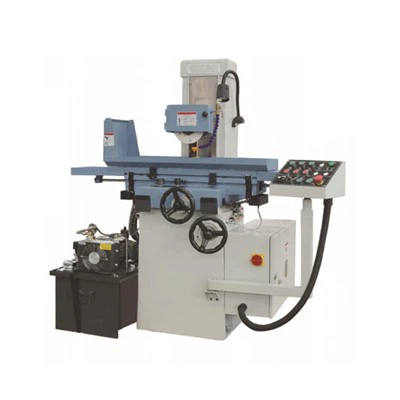
If you’re ready to stop guessing and figure out exactly what an automatic surface grinder will cost for your specific work, hit me up. I’ll walk you through all the options, answer any stupid questions (I’ve heard them all), and help you get a machine that works for you, no hidden fees, no sales BS. Don’t waste another penny on something that doesn’t fit your needs—let’s chat about what you’re grinding, how much you’re grinding, and we’ll get you a clear, fair price.
Vertical Surface Grinder References
- Machinery Guides. "Surface Grinder Cost Analysis for Small to Medium-Sized Businesses". 2023.
- American Machine Tool Distributors’ Association. "2024 Pricing Trends for Automatic Surface Grinders". 2024.
- IndustryWeek. "Total Cost of Ownership for Industrial Grinding Equipment". 2023.
Wuxi Mingxu Machinery Equipment Co., Ltd.
As one of the most professional automatic surface grinder manufacturers and suppliers in China, we’re featured by quality products and good price. Please rest assured to buy the best automatic surface grinder for sale here from our factory. Also, custom service is available.
Address: No. 5-5 Jinke Wealth Plaza, Changjiang North Road, Xinwu District, Wuxi City, Jiangsu Province
E-mail: yingyingmxjd@163.com
WebSite: https://www.mingxu-china.com/
