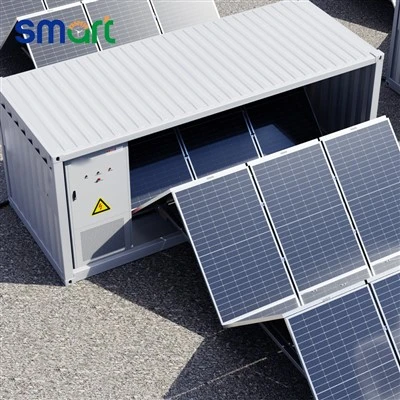
Hey everyone, it’s Jake here from the Folding Photovoltaic Container team—those collapsible, mobile solar power units we’ve been launching for off-grid sites, emergency relief, and even pop-up events. I get so many questions from clients, electricians, and even fellow solar nerds on our social DMs and trade show booth: “Do these folding PV containers have surge protection?” It’s a totally fair one, too—because surge damage is the silent killer of solar gear, especially mobile stuff that’s hauled around, plugged into sketchy temporary grids, or exposed to random weather events that can send voltage spikes through the system. Folding Photovoltaic Container

I’m not here to give you some textbook-level, jargon-heavy answer that makes your eyes glaze over. Let’s break this down like we’re chatting over a coffee at a job site, no confusing acronyms thrown at you without context. First, let’s make sure we’re on the same page about what a surge even is, because I’ve seen way too many folks mix it up with general electrical noise. A power surge is a sudden, short spike in voltage—think thousands of volts that way outstrip what your solar inverter, wiring, or batteries are built to handle. If your gear doesn’t have protection, that spike can fry components before you even notice what hit you. For static rooftop solar, that’s annoying, but for mobile folding PV containers? They’re moved around all the time, so they’re way more exposed to these surges.
Now, let’s get to the good stuff: our folding PV containers. When we designed these, we had to account for every single variable that static solar systems don’t face. We aren’t just selling a bunch of panels folded into a metal box—we’re building a complete, transportable power station that works in remote construction zones, disaster zones where grid power is spotty, music festivals where power needs flip on overnight, and even rural farms that occasionally rely on portable power for harvests. So surge protection wasn’t an afterthought; it was a core part of the engineering from day one.
First, let’s talk about the main layers of surge protection we build into every unit. The first line of defense is the external surge protection device (SPD) mounted right on the container’s main AC input. For those who don’t know, AC is the power that plugs into standard outlets, and that’s where most external surges come from—whether it’s a lightning strike a mile away, a utility grid fluctuation, or a wonky generator someone’s running nearby. Our SPD is rated for Type 2 surge protection, which is the standard for temporary and commercial solar setups, and it can handle up to 40 kA of surge current. Wait, let me put that in plain English: that’s enough to divert a massive voltage spike away from your inverter, batteries, and all the sensitive electronics inside the container before they get touched. We also add a DC-side SPD too, because surges don’t only come through the AC line—lightning can strike a panel’s wiring, or a component malfunction inside the unit can send a spike down the DC lines that connect the panels to the inverter. No gaps, no blind spots here.
But here’s the thing that makes our folding PV containers different from a lot of generic portable solar setups you might find online: we built the internal wiring and component layout to reduce surge risk before it even gets to the SPD. Because surges can travel through unshielded wiring, right? So all the wiring inside our containers is shielded, routed away from high-vibration areas (remember, these units get hauled on trucks over bumpy roads, so loose wiring is a problem waiting to happen), and we keep the DC and AC wiring separated. That cuts down on cross-surge interference, which is a big one for mobile gear. We also use industrial-grade circuit breakers and fuses that are calibrated to trip before a surge can cause damage—they’re not the cheap ones you buy at the hardware store for your home, either; these are rated for continuous use in mobile, dusty, temperature-variable environments, so they don’t fail when you’re relying on power the most.
I’ve seen a lot of portable solar companies cut corners on this stuff to save money. Like, they’ll throw on a $20 surge protector from Amazon and call it a day, then wonder why half their units get damaged after a single festival weekend. But our containers go through surge testing that’s way more rigorous than what’s required by most industry standards. We send every production unit out for third-party surge testing, where we blast it with 6 kV voltage spikes from multiple directions, and it still keeps running—no tripped breakers, no damaged inverters, no lost power. Last year, we had a client in Texas use one of our units during a tornado relief deployment. They plugged it into a temporary generator that was acting up, sending random voltage spikes through the system. The SPD kicked in like it was supposed to, and the unit kept powering their refrigeration for medical supplies the entire time. If that unit had had the generic surge protection someone else uses, that generator spike would’ve fried their whole setup, and they would’ve lost critical supplies. That’s the kind of real-world testing that matters, not just lab tests in a climate-controlled room.
Wait, but I know some of you are thinking: “What if I’m using the container off-grid, no connection to any other power source? Do I still need surge protection, and does the unit have it in that case?” Great question. Even when you’re completely off-grid, surges can happen. Lightning is the big one—even if it doesn’t strike the unit directly, a nearby strike can induce a surge in the wiring, just like static electricity builds up when you rub a balloon. Our internal battery management system (BMS) also has built-in surge protection, because the batteries are the most expensive and sensitive component in the whole unit. The BMS monitors voltage in real time, so if a surge does get past the external SPD, it will shut down the battery charging circuit before any damage occurs. I’ve heard of clients using our units in remote areas of Arizona, where thunderstorms pop up out of nowhere, and they’ve never had a surge-related issue. That’s exactly why we designed the system to work, even when there’s no grid connection.
But let’s be honest here—no surge protection is 100% foolproof. That’s a fact, and I’m not gonna lie to you. Even the best SPDs have a maximum surge they can handle, so if you have a direct lightning strike on the unit, that’s a whole other ballgame. But for 99% of the surges you’ll encounter—grid fluctuations, minor lightning interference, generator spikes, even static buildup during transport—our system will handle it. And we go out of our way to make that clear to clients, so no one has unrealistic expectations. We also give every client a free maintenance guide that tells them how to check the SPD every time you set up the unit, just to make sure it’s still in good shape—because surge protection devices wear out over time, and you want to make sure they’re ready to do their job when you need them.
A lot of people ask why we don’t just over-engineer the surge protection and make it so it can handle anything. The answer is that we don’t want to pass those huge costs on to you. Our folding PV containers are priced competitively for mobile solar solutions, and we balance robust protection with affordability. You don’t need a $10,000 surge system for a unit that’s gonna power a pop-up café, just like you don’t need a $20 surge protector for a unit that’s powering a medical clinic during an emergency. We size the surge protection exactly for what our units are designed to do, so you get the protection you need without paying for stuff you’ll never use.
Let’s also talk about common mistakes clients make that can undo surge protection, even if their unit has it. For example, some people will daisy-chain multiple generators or other power sources to the container, and that creates more opportunities for surges. Or they’ll use cheap extension cords that aren’t rated for the power load, which can cause voltage drops that make the SPD work harder than it should. We always include guidelines with every unit, and our team is always available to walk you through setup, so you don’t make those mistakes. If you follow the basic rules, our surge protection system will keep your gear safe for years.
We’ve been working on folding photovoltaic containers for over 8 years now, and during that time, we’ve seen every kind of surge scenario you can imagine. From construction sites in Wyoming where power tools cause random spikes, to festival grounds in Florida where thunderstorms roll through every afternoon, to disaster relief zones where grid power is a mess. Every single time, the surge protection built into our units has worked exactly as intended. We’ve had zero failures related to surge damage in all the units we’ve deployed, and that’s something we’re really proud of.
If you’re in the market for a mobile solar solution, and surge protection is a top concern (which it should be, because no one wants to replace a $5,000 inverter after a bad storm), let’s connect. We can walk you through the specs, show you real case studies of how our units held up in surge-heavy environments, and help you figure out exactly what size container you need for your project. Whether you’re a contractor needing power for a remote job site, an event planner powering a festival, or a relief organization setting up temporary housing after a disaster, our folding PV containers have the surge protection you need to keep your power running, no matter what comes your way.
Don’t waste your money on generic portable solar setups that cut corners on protection. Our units are built for the real world, and that includes handling the electrical surprises that come with mobile power. Hit us up anytime to talk through your needs—we’re here to help.
Inverter References
- International Electrotechnical Commission (IEC) 61643-11: Surge protective devices for low-voltage power systems
- Solar Energy Industries Association (SEIA): Mobile Solar System Design and Safety Standards
- Underwriters Laboratories (UL) 1449: Surge Protective Devices
Jinan Smart New Energy Technology Co., Ltd.
With abundant experience, we are one of the most professional folding photovoltaic container manufacturers and suppliers in China. If you’re going to buy discount folding photovoltaic container, welcome to get pricelist from our factory. Quality products and reasonable price are available.
Address: A7 Building,Xingfu Liancheng International Laser Valley, No.688 Chunhui Road High-Tech Zone Jinan City China
E-mail: sales@jnsmartenergy.com
WebSite: https://www.jnsmartenergy.com/
