If you’ve ever stood aboard a working ship, you know marine engines are the unsung workhorses of global trade. They run 24/7, hauling everything from raw materials to consumer goods across oceans, and their reliability isn’t just a convenience—it’s the backbone of a $28 trillion global shipping industry. As an oil acid tester supplier, I’ve spent thousands of hours talking to ship engineers, third-party maintenance inspectors, and fleet managers who all ask the same question: Can a standard oil acid tester actually be trusted to test oil in marine engines? The short answer is yes—but only if you understand how marine engine oil works, what acid levels actually mean for these engines, and how to choose and use an acid tester tailored to the unique demands of marine environments. Let’s break this down, because cutting corners here can cost a fleet thousands of dollars in downtime, not to mention safety risks mid-voyage. Oil Acid Tester
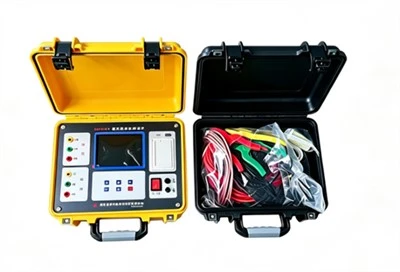
First, let’s start with the basics of marine engine oil and why acid levels matter. Unlike the oil in a passenger car, which sees short, frequent service intervals, marine engine oil runs for thousands of hours straight, often under extreme loads, high temperatures, and exposure to contaminants like salt water, fuel blow-by, and sulfur from heavy fuel oil (HFO). Most large marine engines burn HFO, a cheaper, lower-grade fuel that’s loaded with sulfur, vanadium, and other impurities. When that fuel combusts, it produces sulfuric acid, which seeps into the engine’s lubricating oil. Over time, that acid eats away at the engine’s components: bearings, cylinder walls, piston rings, and even the delicate turbocharger parts that keep the engine running efficiently. Left unchecked, acid buildup causes corrosion, forms sludge, and can lead to catastrophic engine failure—something no fleet manager wants to deal with when their ship is 1,000 miles from the nearest port.
Now, what is an oil acid tester, and how does it work? For anyone not familiar, an acid tester measures the total acid number (TAN) of oil, a standard metric that quantifies how much acidic compounds are present in a sample. TAN is measured in milligrams of potassium hydroxide needed to neutralize all the acids in one gram of oil (mg KOH/g). Fresh marine engine oil typically has a TAN of around 1 to 3 mg KOH/g. Most engine manufacturers set a TAN limit between 5 and 7 mg KOH/g; once you cross that threshold, you’re at high risk for acid-related damage. That’s where an acid tester comes in: it lets engineers test oil on-site, instead of waiting days or weeks for a lab result.
But here’s the thing about marine engine oil that trips a lot of people up: it’s not the same as automotive oil, and its TAN doesn’t just come from combustion byproducts. Marine engine oil is formulated with additives—like detergents, dispersants, and base number (BN) boosters—that are designed to neutralize acid as it forms. BN is the mirror of TAN: it measures the oil’s ability to neutralize acid, and fresh marine oil has a BN of around 8 to 15 mg KOH/g. So when you test marine engine oil, you’re not just looking at TAN—you’re looking at TAN relative to BN, and how quickly that BN is being depleted. A lot of new users make the mistake of thinking a high TAN is always bad, but if the BN is still high, that acid is being neutralized before it can do damage. An oil acid tester that only measures TAN, not BN, is useless for marine applications. That’s why at our company, we’ve designed our marine-specific acid tester to measure both TAN and BN in less than 10 minutes, right on the ship. No more waiting for lab results, no more guessing.
I’ve seen this play out time and time again with our customers. Take a client who runs a fleet of 12 container ships based in Singapore. For years, they sent oil samples to a local lab every 3 months, which meant if TAN spiked unexpectedly, they might not catch it for 6 weeks—by then, the BN was already drained, and their chief engineer had to perform an emergency overhaul on a main engine mid-voyage from Shanghai to Los Angeles. The cost? Over $80,000 in repairs, plus lost revenue from the delayed delivery. When they switched to our acid testers, testing every 2 weeks on each ship, they caught a spike in TAN on one vessel after only 2 weeks. It turned out a faulty fuel injector was dumping extra raw fuel into the cylinders, increasing acid production. They replaced the injector during the next port call, no emergency downtime, no extra costs. That’s the difference that on-site acid testing makes.
But let’s address the counterargument some skeptics bring up: “Lab testing is more accurate, so why use an acid tester at sea?” It’s true that lab testing is highly precise, but it’s slow, expensive, and can’t catch sudden changes in oil quality. Marine engines operate in dynamic conditions: different fuel blends, varying load demands, temperature swings across different ocean routes, even changes in water salinity when ships pass through the Panama Canal or the Red Sea. All of these factors affect oil acid levels, and waiting for a lab to tell you there’s a problem isn’t a strategy—it’s a risk. Acid testers are designed to be a first line of defense, giving you real-time data to adjust maintenance schedules, address small issues before they become big ones, and only send samples to the lab when there’s an abnormality to confirm. That reduces unnecessary lab costs and keeps engines running smoothly.
Another point: not all acid testers are created equal for marine use. A lot of general-purpose acid testers on the market work fine for automotive or industrial equipment that uses lighter oil, but they can’t handle the heavy, viscous oil used in large marine engines. Those thick oils can interfere with test reagents, leading to inaccurate readings. Our testers use a specialized reagent blend calibrated for marine engine lubricants, so even when testing a sample that’s been heated or mixed with small amounts of water or fuel, the TAN and BN readings are consistent with lab results. We also build our testers to withstand the harsh marine environment: water-resistant casing, shock-resistant components, and a battery life that lasts for months without needing a charge. I’ve had customers use our testers on ships in the North Atlantic, where temperatures drop below freezing and seas are rough, and they haven’t had a single calibration issue in three years.
Of course, there are best practices to follow when using an oil acid tester for marine engines, and skipping these will lead to bad data. First, you have to take the right oil sample. Too many engineers take a sample from the dipstick, which only gives you a surface reading, not a true representation of the oil in the engine. The correct way is to take a sample from the engine’s drain port or the sampling valve while the engine is running, so you get a sample of oil that’s actually circulating through the engine, not sitting stagnant. You also need to make sure the sample is free of contaminants: if it has visible water or fuel, that will skew the TAN reading. Second, calibrate your tester regularly. Even the best testers drift over time, so calibrating with a standard oil solution every month (or every 50 tests, whichever comes first) is critical. Third, track your readings over time. A single high TAN doesn’t mean anything if it’s an isolated incident, but a steady upward trend in TAN paired with a downward trend in BN is a clear sign you need to replace the oil or investigate the root cause.
I’ve talked to some engineers who think testing acid levels is too complicated, but that’s not true. Our testers come with step-by-step video tutorials, and we offer on-site training for fleet maintenance teams, so even the newest crew member can learn to run a test correctly in 10 minutes. We’ve also built a cloud-based dashboard that lets fleet managers pull all their test data from every ship in the fleet, sort by engine type, route, or fuel blend, and set automatic alerts when TAN or BN levels cross their pre-set thresholds. That way, you don’t have to check every tester every day—you get a notification right to your phone when there’s an issue that needs attention.
Let’s also talk about cost, because that’s a big factor for any fleet. The price of an acid tester is a fraction of the cost of an engine overhaul. A single main engine overhaul on a large container ship can cost $500,000 or more, plus millions in lost revenue if the ship is out of service. Our acid testers cost a few thousand dollars each, and with regular testing, you can reduce oil-related maintenance costs by 30% or more, according to data from the International Maritime Organization (IMO). The IMO has also implemented stricter regulations on marine emissions and fuel quality in recent years, which means ships are using more high-sulfur fuel in some regions, making acid management even more critical. Testing oil acid levels isn’t just a maintenance best practice anymore—it’s a compliance measure too, because engines that are damaged by acid are more likely to emit excess pollutants.
I’ll be honest: I’ve seen companies try to skip acid testing and only use lab analysis, and it never ends well. Once a tanker I worked with a few years ago had a lab result that showed a TAN of 8 mg KOH/g, but by the time the result came back, the engine had already suffered bearing damage. They had to divert to a port in Australia, which added 10 days to their voyage and cost them over $2 million in demurrage fees and repairs. If they had been testing with an acid tester on board, they would have seen the TAN rising two weeks earlier and been able to plan an oil change during a scheduled port call, no diversion needed.
So to circle back to the original question: Can an oil acid tester be used to test oil in marine engines? The answer is a resounding yes—but only if you choose a tester designed specifically for marine applications, use it correctly, and pair it with regular, proper sampling and data tracking. It’s not a replacement for lab testing, but it’s an essential tool for proactive maintenance that every fleet should have on board.

At the end of the day, the goal of marine engine maintenance is simple: keep the engines running, avoid unplanned downtime, and protect your bottom line. An oil acid tester isn’t a fancy piece of tech for tech’s sake—it’s a tool that gives you control over your engine’s health, right when you need it most, at sea. If you’re still relying on lab testing alone to monitor oil quality, or if you’re using a general-purpose acid tester that’s giving you inconsistent readings, we can help. We offer a range of marine-grade oil acid testers, customized training for your maintenance team, and flexible support to fit the needs of any size fleet. To learn more about how our testers can fit into your maintenance program and help you save on costs and avoid downtime, reach out to our team to discuss your specific marine engine oil testing needs.
Transformer Load And No Load Loss Tester References
- International Maritime Organization. (2022). Guidelines for the Inspection, Maintenance, and Repair of Marine Engines.
- Society of Tribologists and Lubrication Engineers. (2021). Total Acid Number and Base Number Testing for Lubricating Oils.
- American Bureau of Shipping. (2020). Marine Machinery Maintenance Best Practices.
- Naval Facilities Engineering and Expeditionary Warfare Center. (2019). On-Site Oil Analysis for Marine Applications.
Wuhan Goldhome Hipot Electrical Co., Ltd.
Wuhan Goldhome Hipot Electrical Co., Ltd. is one of the most professional oil acid tester manufacturers and suppliers in China, featured by quality products and good price. Welcome to buy oil acid tester in stock here and get pricelist from our factory. Contact us for customized service.
Address: A25 Huading Industrial Park, Wuhan Economic and Technological Development Zone, Hubei Province
E-mail: sales@goldhomehipot.com
WebSite: https://www.goldhomehipot.com/
