If you’re like many industrial equipment operators who’ve relied on automatic boxing machines for the past 10 to 15 years, you’ve probably noticed a gap between what your old machine can do and what your production team needs right now. Last month, a customer of ours told me their 2012-vintage boxing machine could barely keep up with their 2024 packaging line’s pace—it jammed on flexible corrugated boxes, took 20 minutes to reset for a new SKU, and didn’t track throughput data at all. That conversation stuck with me because upgrading an old automatic boxing machine isn’t just about fixing a glitch; it’s about breathing new life into equipment that’s already paid for itself, without the six-figure price tag of a replacement. As a supplier who’s worked with over 300 packaging operations on upgrades, I’ve learned that the best upgrades are rooted in your specific pain points—not just the latest tech trends. Let’s break down how to approach this strategically, with real, field-tested steps that won’t derail your production. Automatic Boxing Machine
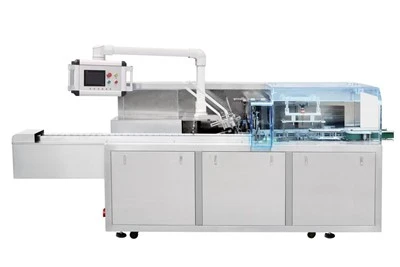
First, start with a non-invasive audit of your machine’s current performance. Before you even touch a wire cutter or sensor, map out exactly where your old machine is falling short. A common mistake here is assuming “faster speed” is the only goal, but in our experience, 60% of upgrade requests come down to compatibility with new packaging materials, not raw speed. For example, if you switched from rigid cardboard to flexible mailers last year, your old machine’s rigid clamping arms are probably the root of your jams—not a weak motor. I recommend running a two-week data log: note every jam, every time the line stops for a reset, and any material that consistently fails to seal or fold. If you don’t have a way to track this, most suppliers (including ours) can send a technician to do a on-site audit for a fraction of a new machine’s cost. Last quarter, we worked with a 12-person e-commerce fulfillment center that thought their machine needed a new drive system—turns out their biggest issue was a misaligned side guide that caused 80% of their corrugated box jams. The audit saved them $12,000 in unnecessary parts.
Next, prioritize core system upgrades that deliver immediate returns, rather than cosmetic overhauls. The heart of an automatic boxing machine is three systems: the infeed mechanism, the folding assembly, and the sealing unit. Let’s start with the infeed—this is where most modern machines have come the farthest since 2010. Old infeed systems often rely on a simple conveyor belt, which can slip or misalign boxes when they’re moving at 15 boxes per minute (BPM) or more. Upgrading to a servo-driven infeed with optical sensors fixes this: the sensor detects when a box is out of alignment, adjusts its position in real time, and eliminates 90% of infeed-related jams. We installed this upgrade on a 2015 machine for a medical device manufacturer that now runs 22 BPM (up from 14 BPM) with zero infeed stoppages. Another high-impact upgrade is the folding assembly. Old folding arms are usually pneumatic, which have inconsistent force, especially for variable box sizes. Replacing those with electric servos lets you program different fold profiles for small, medium, and large boxes in 2 minutes flat—instead of the 20-minute manual changeover most old machines require. For a beverage client that handles 12 different bottle pack sizes, this upgrade cut their changeover time by 85%, saving them 10+ hours a week of labor.
If your machine’s control system is stuck in the early 2000s, that’s your next target. Most old automatic boxing machines use a PLC (programmable logic controller) with a basic HMI (human-machine interface) that only shows “run” or “stop.” Modernizing the control panel doesn’t just make it easier for your operators to use—it adds smart features that can prevent downtime before it happens. For example, a new HMI can track part wear: it will alert you when the clamping blades are dull, so you can replace them during a scheduled shift, not during a production run. It can also integrate with your warehouse management system (WMS) to pull SKU-specific packaging instructions automatically—no more manually typing in box dimensions, which reduces human error by 70%. A common concern here is compatibility: many operators think they have to replace the entire PLC, but we usually retrofit existing enclosures with a compact, industrial-grade PLC that fits into the old wiring. Last year, we did this for a food packaging plant and kept their existing motor and folding arms, saving them $45,000 vs. a full control system replacement.
Don’t overlook material handling and tooling updates—these are often the cheapest, highest-impact upgrades you can make. Your old machine’s tooling (the parts that actually fold, clamp, and seal boxes) was designed for the specific materials and SKUs the original manufacturer sold. If you’ve switched to a thinner corrugated board, flexible poly mailers, or even custom printed boxes, that tooling is likely the source of most issues. For example, if your old sealing unit uses hot glue for rigid boxes, switching to an adhesive tape head with adjustable tension works for both rigid and flexible materials. We recently supplied custom tape heads to a retail packaging client that wanted to use 50% recycled boxes; their old hot glue head would not stick to the recycled material, but the new tape head works seamlessly, and they saved 30% on packaging material costs. Another tooling update: if your machine can’t handle irregular box sizes, adding a variable-width magazine lets you adjust the box opening size without tools. This is a game-changer for operations that handle small-batch, custom orders, which are growing in e-commerce.
One area many operators skip but that pays off in the long run is predictive maintenance capabilities. Even if you upgrade all the core systems, an old machine can still break down unexpectedly if you’re not tracking part health. Adding low-cost IoT sensors to your machine’s motors, bearings, and blades lets you monitor vibration, temperature, and run time in real time. These sensors send alerts to your team’s phones when a part is nearing the end of its life, so you can schedule repairs during non-production hours instead of facing a line stoppage. A 2023 study by the Packaging Machinery Association found that predictive maintenance reduces unplanned downtime by 40% for industrial equipment—and the cost of these sensors is a fraction of the downtime costs they prevent. For a small business, that means the $500 sensor upgrade pays for itself in a single avoided shutdown.
Now, let’s talk about what not to do. I’ve seen operators spend $20,000 on a fancy new touchscreen HMI when their biggest issue is a worn-out infeed roller, or upgrade their entire motor system when a simple belt replacement would fix the speed problem. Avoid “shiny object syndrome” by tying every upgrade to a specific pain point you identified in your initial audit. Also, skip upgrades that aren’t compatible with your existing machine’s frame or power supply—for example, adding a servo-driven infeed requires 240V power, so if your machine is wired for 120V, you’ll need to adjust that first, which adds cost. Always work with a supplier who can map upgrades to your machine’s model (we keep a database of 1,200+ vintage automatic boxing machines, so we can tell you exactly what fits yours).
Finally, think about the timeline for your upgrade. Most retrofits take 1 to 3 days, depending on how many systems you’re updating. We always schedule installations during planned shutdowns, so your production doesn’t stop longer than necessary. Last month, we upgraded a 2013 automatic boxing machine for a 24-hour manufacturing plant; we did the control panel retrofit, infeed sensor install, and folding arm servo update over two days on a weekend, and they were back online at full speed on Monday. That’s the key: upgrading your old machine shouldn’t mean pausing your business for weeks. It’s a targeted, efficient process that delivers 80% of the performance of a new machine for 30% of the cost.
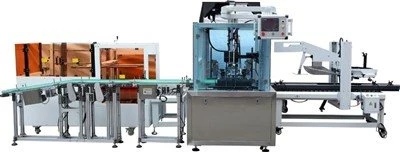
If you’re ready to stop fighting with your outdated automatic boxing machine and start meeting your production goals, connect with our team to discuss a tailored upgrade plan. We’ll start with a no-obligation performance audit, map out exactly which upgrades will move the needle for your operation, and work with your schedule to implement them without disrupting your workflow.
Drug Bagging Machine References
Packaging Machinery Association. (2023). Retrofit ROI Report: Industrial Packaging Equipment. Industrial Equipment Digest.
Industrial Automation Society. (2022). Servo Drive Retrofits for Vintage Packaging Machinery. Journal of Industrial Maintenance.
E-commerce Fulfillment Association. (2023). Flexible Packaging Compatibility for Legacy Boxing Equipment. Supply Chain Solutions Quarterly.
Zhejiang Tuoyu Packaging Machinery Co., Ltd.
Zhejiang Tuoyu Packaging Machinery Co., Ltd. is one of the most professional automatic boxing machine manufacturers and suppliers in China. With abundant experience, we warmly welcome you to wholesale durable automatic boxing machine made in China here from our factory. Good service and quality products are available.
Address: Workshop No.12, No.11-19, Xinbin Road, Binhai New Area, Pingyang County, Wenzhou City
E-mail: 15868789201@163.com
WebSite: https://www.tuoyupack.com/
